Stay tune we are working on a great experience for you.

Join our exclusive FREE webinar!
Industry Drug Abuse & Compliance
With Ali Cooper, CUBEX® Senior Director of Corporate Accounts.
Tuesday, 11/18, 2025 at 11:00 am PT | 12:00 pm MST | 1:00 pm CST | 2:00 pm EST


Stay tune we are working on a great experience for you.
Join our exclusive FREE webinar!
Industry Drug Abuse & Compliance
With Ali Cooper, CUBEX® Senior Director of Corporate Accounts.
Tuesday, 11/18, 2025 at 11:00 am PT | 12:00 pm MST | 1:00 pm CST | 2:00 pm EST

Why Proper Pharmaceutical Refrigeration Matters
Veterinary hospitals lose medication to improper storage more often than most teams realize, and rarely in ways that are obvious. Medications, vaccines, and biologics are highly sensitive to temperature changes, and even brief exposure outside the safe range can compromise potency. This leads to wasted stock, financial losses, and risks to patient outcomes. By the time it surfaces, the clinical and financial consequences are already in motion.
Medical-grade pharmaceutical refrigerators are designed to ensure drugs remain viable, safe, and ready when needed. Beyond compliance, reliable refrigeration supports operational efficiency by reducing spoilage, avoiding costly emergency replacements, and keeping your team focused on patients.
Risks of Improper Storage in Pharmaceuticals
Improper storage carries serious consequences. Medications exposed to incorrect or inconsistent temperatures may lose effectiveness, leading to compromised treatment outcomes. In many cases, these drugs must be discarded, creating direct financial losses and contributing to shortages.
According to the NIH, the risks extend beyond wasted products. Hospitals that fail to maintain compliant storage may also face regulatory penalties. Studies show that poorly designed or maintained refrigerators are more likely to experience fluctuations or fail during power outages. When that happens in a veterinary setting, the consequences are clinical as well as operational.
Key Features of Medical-Grade Pharmaceutical Refrigerators
Commercial refrigerators are not designed for pharmaceutical use. Medical-grade units provide advanced safeguards that ensure consistent performance, such as:
- Uniform temperature distribution to prevent the hot and cold spots that compromise drug integrity without any visible indication
- Enhanced insulation and seals that limits temperature fluctuation during the repeated door openings that happen in any active treatment area
- Digital monitoring systems to provide continuous visibility into temperature data rather than a single point-in-time reading
- Audible and digital alarms that notify staff of issues immediately, before product or samples are lost
- Backup power features to maintain stability during outages without staff intervention
These features protect medication integrity while easing staff burden through automation and real-time visibility. The goal is to remove human error from a process where the consequences of error are not immediately apparent.
The Role of Cold Chain Monitoring and Temperature Control
Cold chain monitoring is essential for maintaining accountability and chain of custody. From the point of delivery to the point of administration there should be a documented record of temperature at every step. Digital monitoring systems create that record automatically: continuous logging, automated alerts, and remote dashboards that give you visibility without requiring someone to physically check the unit. Automated electronic records reduce human error while supporting compliance with strict standards.
Medical-grade refrigeration paired with real-time temperature control and monitoring technology creates a safety net against spoilage and financial loss.
Applications of Refrigeration in Veterinary Medicine
Medical-grade refrigeration serves different functions depending on the clinical environment:
- Treatment areas rely on pharmaceutical refrigerators for injectables, vaccines, and biologics that are high-value and often time-critical.
- Pharmacies depend on consistent temperature maintenance to preserve the integrity of dispensed medications.
- Laboratories, whether running diagnostics in-house or sending samples to a reference lab, depend on consistent refrigeration for diagnostic reagents, test kits, and biological samples. A temperature excursion at any point in that chain affects result accuracy.
In veterinary medicine, the product mix adds complexity. A single hospital may store vaccines, controlled substances subject to DEA regulations, and biologics that cannot tolerate even a brief excursion. Specialized equipment, including dedicated vaccine units and ultra-low freezers, allows storage conditions to be matched precisely to product requirements rather than approximated by a single general-purpose unit.
Choosing the Right Pharmaceutical Refrigerator for Your Hospital
Selecting refrigeration equipment starts with the fundamentals: size, capacity, energy efficiency, and compliance standards. But those criteria describe only the starting point. The right unit also fits how the hospital actually operates, integrates with existing monitoring infrastructure, and performs reliably without requiring constant staff intervention to function correctly. The right choice reduces long-term risks and ensures medications remain viable.
Equipment selection and staff training are not separate decisions. A medical-grade unit used incorrectly, doors held open during restocking, alarms silenced without investigation, temperature logs ignored, does not deliver the outcomes it was designed for. The training investment is part of the total cost of getting this right.
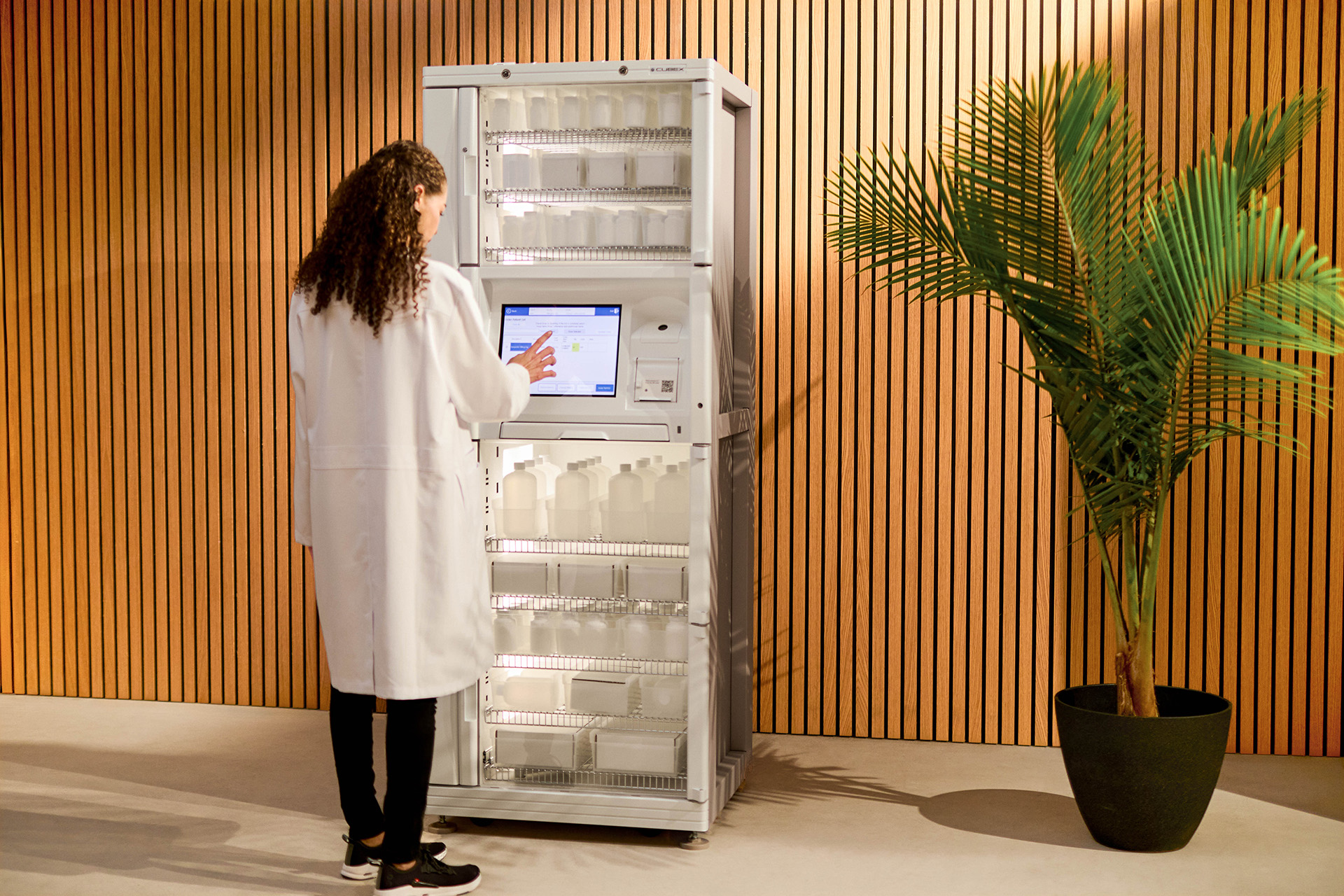
CUBEX Products, including the Qlock, are built to complement pharmaceutical refrigeration by adding layers of security and intelligence. Paired with CUBEX Software, hospitals gain automated inventory intelligence, real-time visibility, and charge capture designed for clinical workflows. Refrigeration protects the product. CUBEX controls access, maintains accountability, and strengthens operational control.
Protecting Patients and Preserving Value
Pharmaceutical refrigeration touches patient safety, regulatory compliance, and financial performance at the same time. These are not separate categories, they share the same root cause. Medications stored properly retain their full therapeutic strength, ensuring safe and effective treatment. Diagnostic supplies and samples maintained at proper temperatures produce results you can trust. When either fails, the downstream effects are clinical and operational.
Hospitals that manage this well benefit from reduced waste, fewer emergency reorders, and stronger financial performance. By combining medical-grade refrigerators, cold chain monitoring, and integrated inventory automation solutions, veterinary practices safeguard both patient outcomes and profitability together.
About CUBEX
CUBEX is an automated inventory management platform for veterinary hospitals. Combining secure smart devices with purpose-built software, CUBEX tracks every dispense in real time, supports controlled substance compliance, reduces waste and stockouts, and streamlines replenishment through connected workflows, including integrations with leading PIMS and supplier ordering platforms. The result is less manual work, better inventory control, and more time back for veterinary teams. Learn more →

Why Proper Pharmaceutical Refrigeration Matters
Veterinary hospitals lose medication to improper storage more often than most teams realize, and rarely in ways that are obvious. Medications, vaccines, and biologics are highly sensitive to temperature changes, and even brief exposure outside the safe range can compromise potency. This leads to wasted stock, financial losses, and risks to patient outcomes. By the time it surfaces, the clinical and financial consequences are already in motion.
Medical-grade pharmaceutical refrigerators are designed to ensure drugs remain viable, safe, and ready when needed. Beyond compliance, reliable refrigeration supports operational efficiency by reducing spoilage, avoiding costly emergency replacements, and keeping your team focused on patients.
Risks of Improper Storage in Pharmaceuticals
Improper storage carries serious consequences. Medications exposed to incorrect or inconsistent temperatures may lose effectiveness, leading to compromised treatment outcomes. In many cases, these drugs must be discarded, creating direct financial losses and contributing to shortages.
According to the NIH, the risks extend beyond wasted products. Hospitals that fail to maintain compliant storage may also face regulatory penalties. Studies show that poorly designed or maintained refrigerators are more likely to experience fluctuations or fail during power outages. When that happens in a veterinary setting, the consequences are clinical as well as operational.
Key Features of Medical-Grade Pharmaceutical Refrigerators
Commercial refrigerators are not designed for pharmaceutical use. Medical-grade units provide advanced safeguards that ensure consistent performance, such as:
- Uniform temperature distribution to prevent the hot and cold spots that compromise drug integrity without any visible indication
- Enhanced insulation and seals that limits temperature fluctuation during the repeated door openings that happen in any active treatment area
- Digital monitoring systems to provide continuous visibility into temperature data rather than a single point-in-time reading
- Audible and digital alarms that notify staff of issues immediately, before product or samples are lost
- Backup power features to maintain stability during outages without staff intervention
These features protect medication integrity while easing staff burden through automation and real-time visibility. The goal is to remove human error from a process where the consequences of error are not immediately apparent.
The Role of Cold Chain Monitoring and Temperature Control
Cold chain monitoring is essential for maintaining accountability and chain of custody. From the point of delivery to the point of administration there should be a documented record of temperature at every step. Digital monitoring systems create that record automatically: continuous logging, automated alerts, and remote dashboards that give you visibility without requiring someone to physically check the unit. Automated electronic records reduce human error while supporting compliance with strict standards.
Medical-grade refrigeration paired with real-time temperature control and monitoring technology creates a safety net against spoilage and financial loss.
Applications of Refrigeration in Veterinary Medicine
Medical-grade refrigeration serves different functions depending on the clinical environment:
- Treatment areas rely on pharmaceutical refrigerators for injectables, vaccines, and biologics that are high-value and often time-critical.
- Pharmacies depend on consistent temperature maintenance to preserve the integrity of dispensed medications.
- Laboratories, whether running diagnostics in-house or sending samples to a reference lab, depend on consistent refrigeration for diagnostic reagents, test kits, and biological samples. A temperature excursion at any point in that chain affects result accuracy.
In veterinary medicine, the product mix adds complexity. A single hospital may store vaccines, controlled substances subject to DEA regulations, and biologics that cannot tolerate even a brief excursion. Specialized equipment, including dedicated vaccine units and ultra-low freezers, allows storage conditions to be matched precisely to product requirements rather than approximated by a single general-purpose unit.
Choosing the Right Pharmaceutical Refrigerator for Your Hospital
Selecting refrigeration equipment starts with the fundamentals: size, capacity, energy efficiency, and compliance standards. But those criteria describe only the starting point. The right unit also fits how the hospital actually operates, integrates with existing monitoring infrastructure, and performs reliably without requiring constant staff intervention to function correctly. The right choice reduces long-term risks and ensures medications remain viable.
Equipment selection and staff training are not separate decisions. A medical-grade unit used incorrectly, doors held open during restocking, alarms silenced without investigation, temperature logs ignored, does not deliver the outcomes it was designed for. The training investment is part of the total cost of getting this right.
CUBEX Products, including the Qlock, are built to complement pharmaceutical refrigeration by adding layers of security and intelligence. Paired with CUBEX Software, hospitals gain automated inventory intelligence, real-time visibility, and charge capture designed for clinical workflows. Refrigeration protects the product. CUBEX controls access, maintains accountability, and strengthens operational control.
Protecting Patients and Preserving Value
Pharmaceutical refrigeration touches patient safety, regulatory compliance, and financial performance at the same time. These are not separate categories, they share the same root cause. Medications stored properly retain their full therapeutic strength, ensuring safe and effective treatment. Diagnostic supplies and samples maintained at proper temperatures produce results you can trust. When either fails, the downstream effects are clinical and operational.
Hospitals that manage this well benefit from reduced waste, fewer emergency reorders, and stronger financial performance. By combining medical-grade refrigerators, cold chain monitoring, and integrated inventory automation solutions, veterinary practices safeguard both patient outcomes and profitability together.