Stay tune we are working on a great experience for you.

Join our exclusive FREE webinar!
Industry Drug Abuse & Compliance
With Ali Cooper, CUBEX® Senior Director of Corporate Accounts.
Tuesday, 11/18, 2025 at 11:00 am PT | 12:00 pm MST | 1:00 pm CST | 2:00 pm EST


Stay tune we are working on a great experience for you.
Join our exclusive FREE webinar!
Industry Drug Abuse & Compliance
With Ali Cooper, CUBEX® Senior Director of Corporate Accounts.
Tuesday, 11/18, 2025 at 11:00 am PT | 12:00 pm MST | 1:00 pm CST | 2:00 pm EST

Running a veterinary hospital requires balancing patient care with adherence to strict regulatory compliance requirements. One of the most important regulatory obligations is maintaining accurate controlled substance logs as part of DEA-required recordkeeping. Your controlled substance log records are not only a legal requirement, they also protect veterinarians, staff, and patients by ensuring that controlled medications are properly used and tracked with precision.
Why DEA Logs Matter for Veterinary Hospitals
Controlled substances are an essential aspect of veterinary medicine, from anesthesia to pain management. Working with controlled substances is a privilege, and with that privilege comes the responsibility to document every transaction. The DEA requires DEA registrants to maintain accurate logs of all controlled substances in inventory; ensuring accountability and documented chain of custody. Proper logging safeguards patients, prevents misuse, and helps protect the integrity of the profession.
DEA Log Requirements: What Must Be Recorded
DEA recordkeeping requirements outlined in 21 CFR 1304 set forth clear requirements for controlled substance documentation. All controlled substances must be tracked by container. This applies to both opened and unopened containers. At a minimum, controlled substance logs for opened containers should include:
- Name, Container Size, Strength, Form
- Date
- Client/Patient Name
- Client ID (Chart #)
- Bottle number
- Reason/Notes
- Amount Used (in MLs for liquid or # tablets)
- Amount Wasted
- Balance
- Initials
- Initials (for when physical count is conducted)
- End of bottle counts.
At a minimum, controlled substance logs for unopened containers should include:
- Name, Container Size, Strength and Form
- Date CS’s received
- Unique Bottle #
- Volume (liquids) or # of Tablets
- Supplier NDC #
- Lot #
- Expiration Date
- Date received and back stocked
- Logged By (initials)
- Date Moved to Active Stock
- Moved By (initials)
Controlled substance logs must be organized so that schedule II logs are maintained separately from schedule III-V logs and that all controlled substance logs are separated out from non-federally scheduled drug logs. Controlled substance logs maintained in “real-time”, chronologically, retained on-site at the DEA-registered premises for the current two-year period per DEA requirements (or longer depending on the state you practice in). During DEA and/or state inspections, regulators will review controlled substance logs to verify that you are adhering to recordkeeping compliance requirements. For veterinary hospitals, keeping organized and legible documentation is essential to reducing compliance risks.

Common Mistakes and Compliance Risks
Manual logging systems can be prone to human errors such as missing initials, incomplete entries, or delays that lead to “back-logging”, which is not allowed. Even small discrepancies in controlled substance logs can lead to major compliance issues. One of the ways this commonly happens is from failing to frequently reconcile controlled substance logs (expected inventory) against physical counts of controlled substances in storage (actual inventory). When expected inventory and actual inventory do not align, the difference is referred to as a discrepancy, which must immediately be addressed and either thoroughly resolved or reported if it cannot be resolved. While discrepancies may result from oversights or mistakes they can also be a sign of diversion, which is why it is important to regularly conduct reconciliations to ensure discrepancies are consistently identified and addressed.
Do You Need a DEA Log Template?
Some hospitals use templates to promote logging consistency and ensure required information is included in all log entry fields. While a template can help reduce the risk of missing information, it still requires diligent manual entry. This approach remains time-consuming, vulnerable to human error, and difficult to scale.
How CUBEX Simplifies DEA Log Compliance
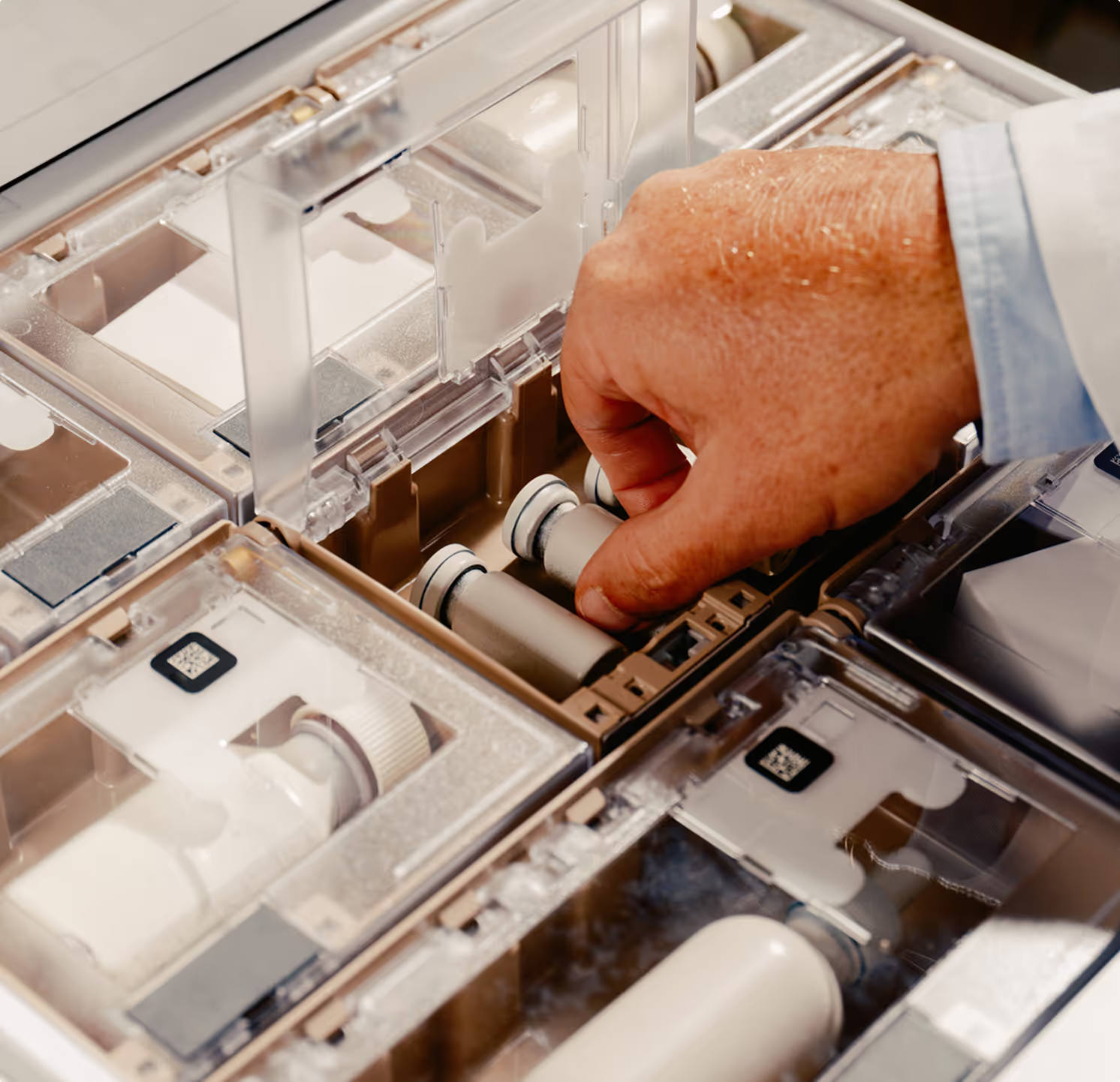
CUBEX Products provide more than a template; they deliver automated solutions that integrate compliance into daily workflows. With CUBEX Software, every transaction is recorded accurately and securely, strengthening the chain of custody and supporting charge capture.
Instead of juggling paper logs, hospitals gain automated updates, inventory reconciliation workflows, and real-time reporting. These solutions not only help DEA registrants meet DEA requirements but also free up valuable time, allowing teams to focus on patients. Use the Lost Profit Calculator to see how automation can reduce compliance risks while improving profitability.
Learn more about why 130,000 veterinary professionals trust CUBEX daily for secure, automated inventory intelligence.
Final Thoughts on DEA Log Requirements
Maintaining DEA-controlled substance logs is both a regulatory and professional responsibility. Every log entry represents accountability: accountability to clients, regulatory agencies, and the veterinary profession at large. By adopting automated compliance tools, hospitals strengthen trust, protect patients, and safeguard the future of their teams and their reputations.
About CUBEX
CUBEX is an automated inventory management platform for veterinary hospitals. Combining secure smart devices with purpose-built software, CUBEX tracks every dispense in real time, supports controlled substance compliance, reduces waste and stockouts, and streamlines replenishment through connected workflows, including integrations with leading PIMS and supplier ordering platforms. The result is less manual work, better inventory control, and more time back for veterinary teams. Learn more →

Running a veterinary hospital requires balancing patient care with adherence to strict regulatory compliance requirements. One of the most important regulatory obligations is maintaining accurate controlled substance logs as part of DEA-required recordkeeping. Your controlled substance log records are not only a legal requirement, they also protect veterinarians, staff, and patients by ensuring that controlled medications are properly used and tracked with precision.
Why DEA Logs Matter for Veterinary Hospitals
Controlled substances are an essential aspect of veterinary medicine, from anesthesia to pain management. Working with controlled substances is a privilege, and with that privilege comes the responsibility to document every transaction. The DEA requires DEA registrants to maintain accurate logs of all controlled substances in inventory; ensuring accountability and documented chain of custody. Proper logging safeguards patients, prevents misuse, and helps protect the integrity of the profession.
DEA Log Requirements: What Must Be Recorded
DEA recordkeeping requirements outlined in 21 CFR 1304 set forth clear requirements for controlled substance documentation. All controlled substances must be tracked by container. This applies to both opened and unopened containers. At a minimum, controlled substance logs for opened containers should include:
- Name, Container Size, Strength, Form
- Date
- Client/Patient Name
- Client ID (Chart #)
- Bottle number
- Reason/Notes
- Amount Used (in MLs for liquid or # tablets)
- Amount Wasted
- Balance
- Initials
- Initials (for when physical count is conducted)
- End of bottle counts.
At a minimum, controlled substance logs for unopened containers should include:
- Name, Container Size, Strength and Form
- Date CS’s received
- Unique Bottle #
- Volume (liquids) or # of Tablets
- Supplier NDC #
- Lot #
- Expiration Date
- Date received and back stocked
- Logged By (initials)
- Date Moved to Active Stock
- Moved By (initials)
Controlled substance logs must be organized so that schedule II logs are maintained separately from schedule III-V logs and that all controlled substance logs are separated out from non-federally scheduled drug logs. Controlled substance logs maintained in “real-time”, chronologically, retained on-site at the DEA-registered premises for the current two-year period per DEA requirements (or longer depending on the state you practice in). During DEA and/or state inspections, regulators will review controlled substance logs to verify that you are adhering to recordkeeping compliance requirements. For veterinary hospitals, keeping organized and legible documentation is essential to reducing compliance risks.
Common Mistakes and Compliance Risks
Manual logging systems can be prone to human errors such as missing initials, incomplete entries, or delays that lead to “back-logging”, which is not allowed. Even small discrepancies in controlled substance logs can lead to major compliance issues. One of the ways this commonly happens is from failing to frequently reconcile controlled substance logs (expected inventory) against physical counts of controlled substances in storage (actual inventory). When expected inventory and actual inventory do not align, the difference is referred to as a discrepancy, which must immediately be addressed and either thoroughly resolved or reported if it cannot be resolved. While discrepancies may result from oversights or mistakes they can also be a sign of diversion, which is why it is important to regularly conduct reconciliations to ensure discrepancies are consistently identified and addressed.
Do You Need a DEA Log Template?
Some hospitals use templates to promote logging consistency and ensure required information is included in all log entry fields. While a template can help reduce the risk of missing information, it still requires diligent manual entry. This approach remains time-consuming, vulnerable to human error, and difficult to scale.
How CUBEX Simplifies DEA Log Compliance
CUBEX Products provide more than a template; they deliver automated solutions that integrate compliance into daily workflows. With CUBEX Software, every transaction is recorded accurately and securely, strengthening the chain of custody and supporting charge capture.
Instead of juggling paper logs, hospitals gain automated updates, inventory reconciliation workflows, and real-time reporting. These solutions not only help DEA registrants meet DEA requirements but also free up valuable time, allowing teams to focus on patients. Use the Lost Profit Calculator to see how automation can reduce compliance risks while improving profitability.
Learn more about why 130,000 veterinary professionals trust CUBEX daily for secure, automated inventory intelligence.
Final Thoughts on DEA Log Requirements
Maintaining DEA-controlled substance logs is both a regulatory and professional responsibility. Every log entry represents accountability: accountability to clients, regulatory agencies, and the veterinary profession at large. By adopting automated compliance tools, hospitals strengthen trust, protect patients, and safeguard the future of their teams and their reputations.