Real-time inventory data helps veterinary hospitals make smarter purchasing decisions by showing what's on the shelf and how fast it's moving right now, not as of the last count. With that, a hospital can set a reorder point for each item, order before it runs out, and stop buying more of what's already sitting there.
Why do hospitals order too much and still run out?
Most ordering runs on habit. Someone walks the shelves, sees what looks low, and orders enough to feel safe. The count behind that order is only as fresh as the last time someone counted.
That creates two problems at once. Items that look low get ordered again, even when a full case is sitting in another room. Items nobody checks run out in the middle of a busy day.
Both cost money. Extra stock is cash on a shelf, and some of it expires before anyone uses it. A stockout means a rush order, a substitute, or a delayed procedure. The fix isn't ordering more or ordering less. It's ordering from what's actually happening.
What is real-time inventory data?
Real-time inventory data is an on-hand count that updates every time something is taken, received, or returned. Instead of a number from the last count, the hospital sees what's there now and how fast each item is going.
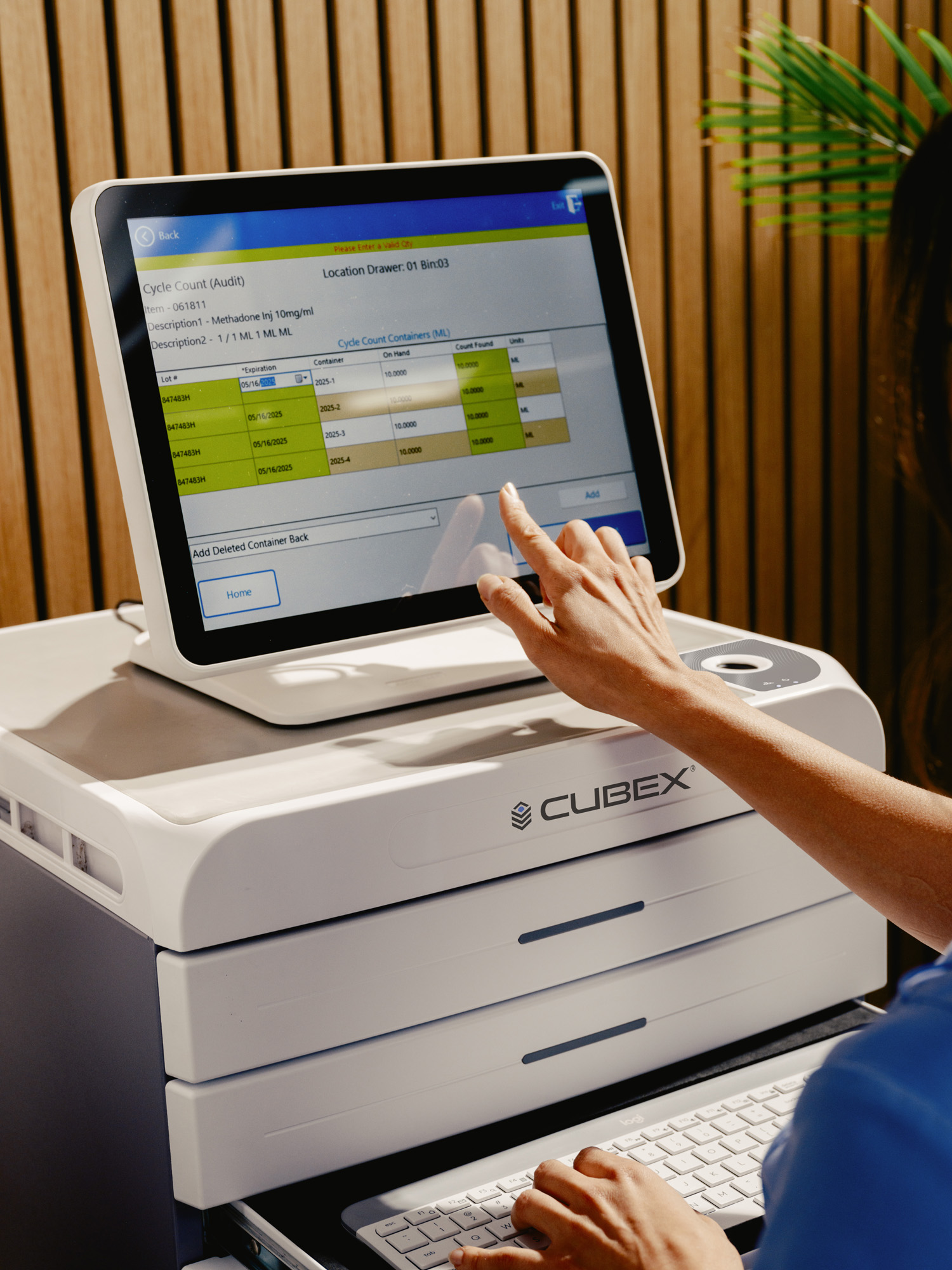
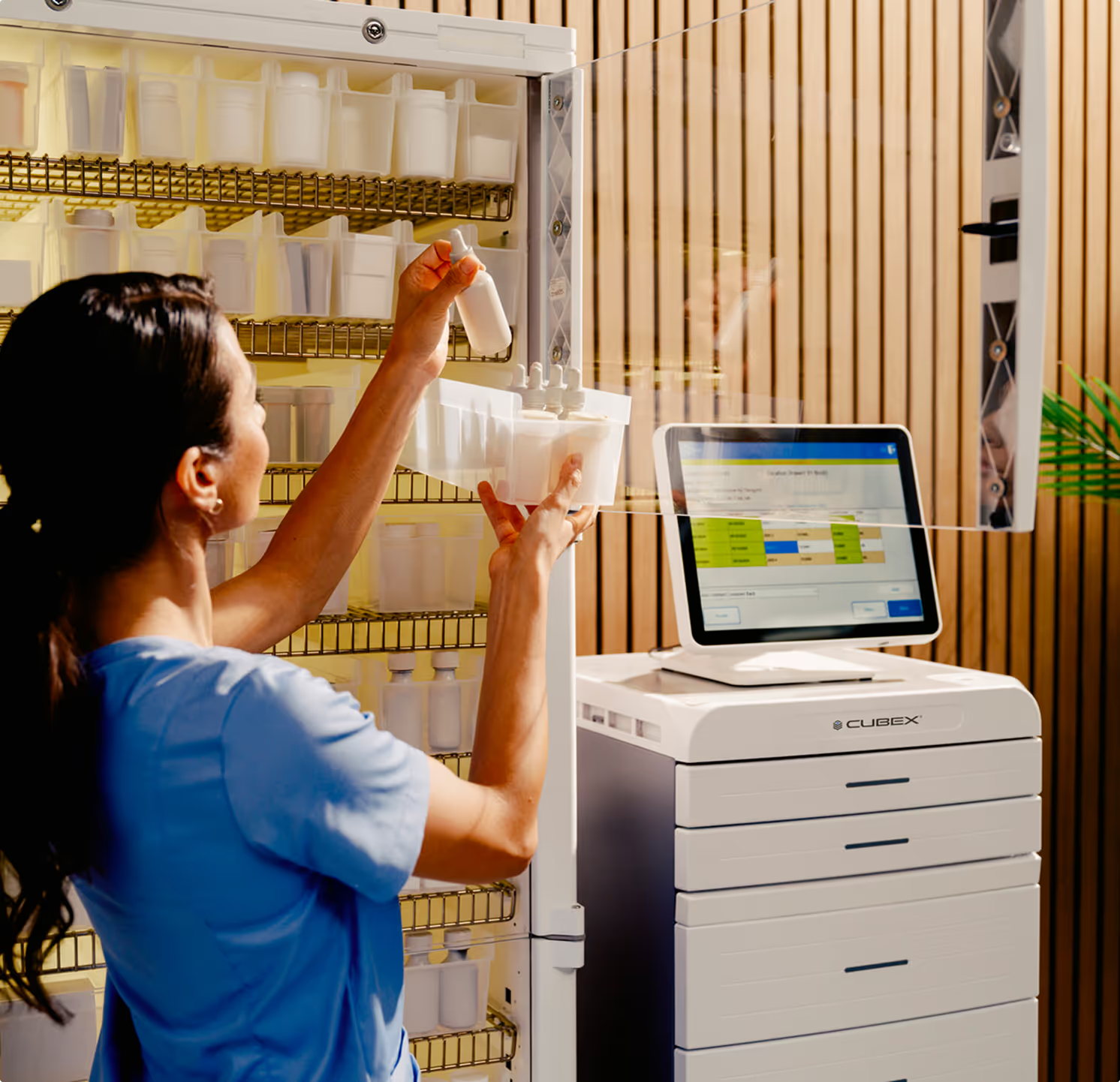
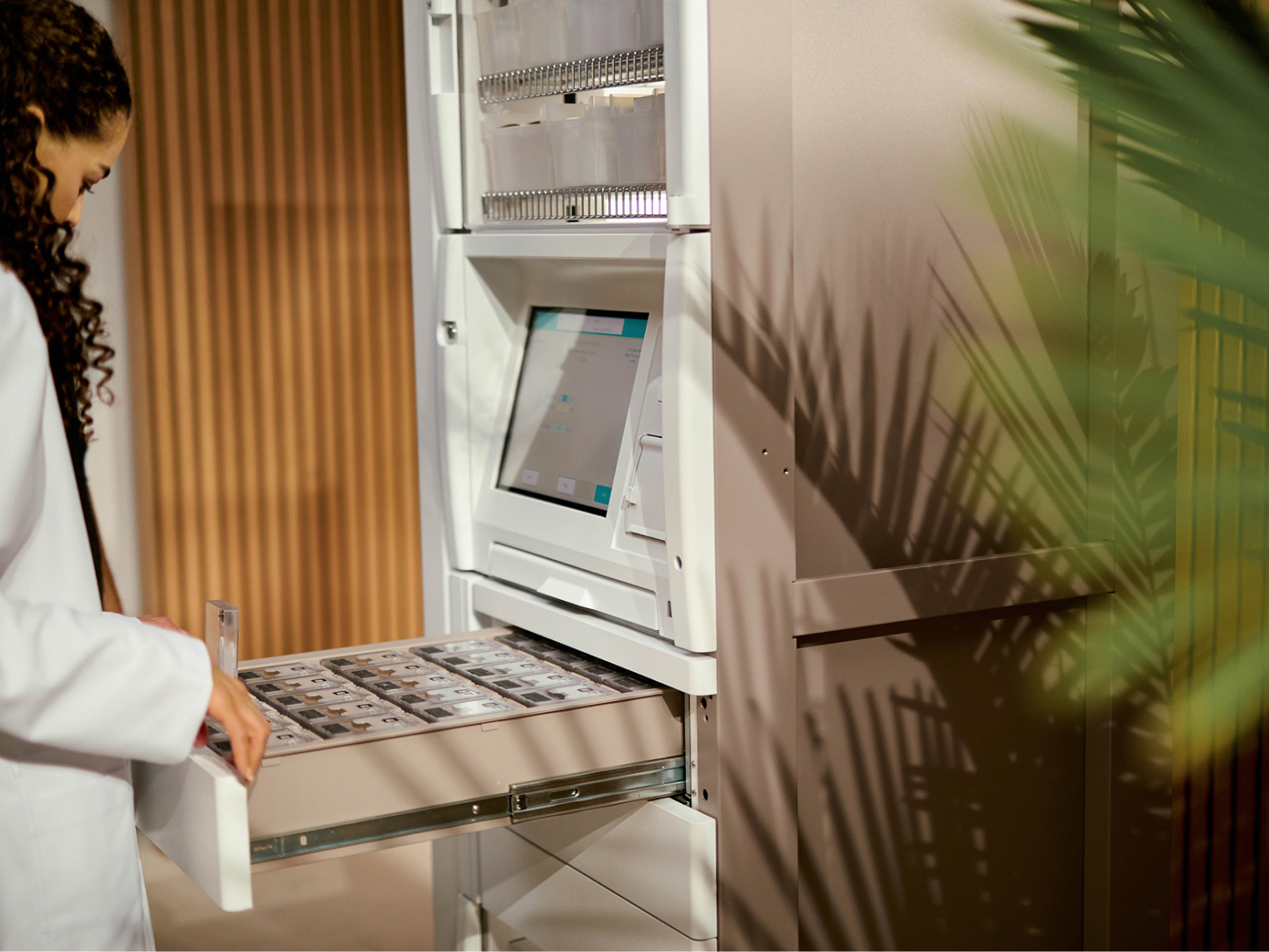
That only works if every use gets recorded when it happens. In a manual process, the count depends on someone writing the transaction down later, and some never get written. With Cubex, the record is part of the dispense. Staff log in, select the patient and the item, and take what they need. The on-hand count updates on its own. Cubex supply management extends the same tracking to open shelves and stockrooms.
How do you know when to reorder?
Every item needs a reorder point, sometimes called a par level. In plain English, it's the minimum stock level: when the count drops to it, you order. Set it too low and you run out before the delivery arrives. Set it too high and stock piles up.
Here's a simple way to set one:
- Find average daily use. Take how much of the item you used over the last few months and divide by the number of days.
- Find the lead time. How many days does your distributor take to deliver it?
- Pick your backup stock. Decide how many extra days of supply you want on hand for a busy stretch or a late delivery. This is often called safety stock.
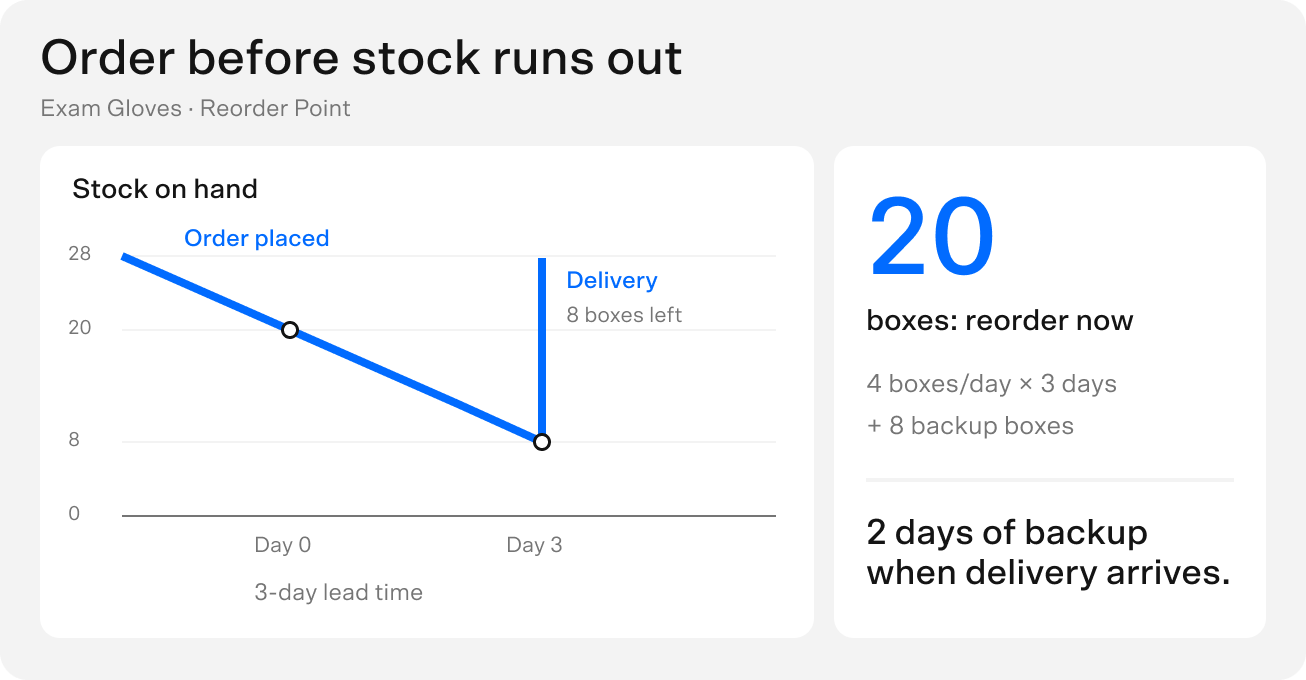
- Do the math. Reorder point = (average daily use × lead time in days) + backup stock.
Say a hospital uses 4 boxes of exam gloves a day, delivery takes 3 days, and it wants 2 days of backup. The reorder point is (4 × 3) + (4 × 2) = 20 boxes. When the count hits 20, it's time to order.
Real-time data matters here because both inputs have to be current. A reorder point built on last year's guess and checked against last week's count is still a guess.
How much should you order at a time?
The reorder point tells you when. The order quantity tells you how much. Order too much and cash sits on the shelf. Order too little and someone is placing orders every other day.
Weigh four things for each item:
- How fast it moves
- Its shelf life. Don't order more than you'll use before it expires.
- Case sizes and distributor minimums
- Storage space, especially refrigerated space
Slow movers and short-dated items should come in smaller amounts, more often. Fast movers with a long shelf life can come in bigger orders. For the carrying cost math, see what it really costs to hold inventory.
How do you plan for busy seasons?
Demand isn't flat. Flea and tick season, a dental promotion, a new doctor, or a new service can all change what gets used. A reorder point that worked in January can be wrong by June.
Real-time data shows the shift as it starts. If an item's daily use climbs, its reorder point should climb with it. Last year's usage for the same month is a good place to start a forecast. It won't predict everything, but it beats guessing.
A simple rhythm: check your fastest movers every month and everything else every quarter. Check sooner when something changes, like a new service line.
What happens when reordering is automatic?
Once usage is tracked in real time, the count can do the ordering. When an item hits its reorder point, the order goes to the distributor or supplier without anyone writing it.
Cubex connects to the systems hospitals already use, from their practice management software to the distributors, suppliers, and procurement platforms they order from. Some hospitals buy most of their stock from one distributor. Others shop prices across several suppliers through a procurement platform like Vetcove. Either way, Cubex software automates reordering, and those connections bring in catalog and pricing, so the team sees what an item costs before it's ordered.
The team still sets the reorder points and order sizes. The system does the counting and the writing.
Where should a hospital start?
Start with the treatment area, then move to the pharmacy. In each area, pick the items that cause the most trouble: the ones you run out of and the ones that expire. Set a reorder point for each from real usage, watch them for a month, and adjust. Then add the next group.
Once ordering is under control, see where your inventory money goes.
Cubex is an automated inventory management platform for veterinary hospitals. It records every dispense as it happens, keeps on-hand counts current, and reorders when stock runs low.
Frequently asked questions
What is a reorder point?
A reorder point is the minimum stock level for an item. When the count drops to it, it's time to order. You'll sometimes hear it called a par level. It covers what you'll use while the order is on its way, plus backup stock.
How do you calculate a reorder point?
Multiply average daily use by delivery lead time in days, then add backup stock. If you use 4 boxes a day, delivery takes 3 days, and you keep 2 days of backup, the reorder point is 20 boxes.
How much backup stock should a veterinary hospital keep?
Enough to cover a busy stretch or a late delivery. Fast movers and items you can't run out of get more. Slow movers and short-dated items get less, since extra stock is more likely to expire.
How often should reorder points be updated?
Check your fastest movers every month and everything else every quarter. Update sooner when usage shifts, like a new service, a new doctor, or a seasonal rush. With Cubex, you don't have to keep that schedule yourself. The platform already knows how fast each item is moving, tells you when a reorder point needs to change, and coaches you on where to set it. That's the idea behind Inventory Intelligence.
Can veterinary inventory ordering be automated?
Yes. When an inventory system tracks usage in real time, an order can go out when stock hits its reorder point, without anyone writing it. Cubex connects to the distributors and suppliers hospitals buy from, plus procurement platforms like Vetcove that compare prices across suppliers. That means automatic reordering can work the way your hospital already buys.
About CUBEX
CUBEX is an automated inventory management platform for veterinary hospitals. Combining secure smart devices with purpose-built software, CUBEX tracks every dispense in real time, supports controlled substance compliance, reduces waste and stockouts, and streamlines replenishment through connected workflows, including integrations with leading PIMS and supplier ordering platforms. The result is less manual work, better inventory control, and more time back for veterinary teams. Learn more →