Proper management of controlled substances is one of the most important responsibilities a DEA registrant has in a veterinary hospital. To stay compliant with Drug Enforcement Administration (DEA) regulations, DEA registrants, and the hospitals they are ordering controlled substances on behalf of, are required to maintain complete and accurate logs of each substance on a current basis (21 CFR 1304.21(a)). Controlled substance logs not only serve as a documented accountability trail, they provide a verification system of checks and balances, allowing physical inventory counts to be reconciled against what is reflected in your logs so that if discrepancies exist they can be identified, investigated and either resolved or reported. When maintained properly, controlled substance logs are a safeguard against drug diversion and recordkeeping violations that help maintain inventory integrity for the betterment of patients and staff.
At the same time, DEA logging is time-consuming and can be hard to keep up with. At CUBEX, we specialize in helping veterinary teams simplify the controlled substance logging process with automated systems that reduce human error, improve accuracy, and keep hospitals inspection-ready at all times.
Understanding Controlled Substance Logs and Their Purpose
Controlled substance logs are a DEA requirement for all DEA registrants that work with them. The requirements for DEA logs are outlined in 21 CFR 1304.11 and 21 CFR 1304.21. These logs are an official record documenting every acquisition, dispensing and disposal of controlled substances for a DEA registrant. They must be maintained in “real-time, chronologically for the current two-year period in a manner that is “readily retrievable” for review at the registered location. Controlled substance logs cannot be “commingled with any other records (like your practice management software records) or logs for non-federally scheduled drugs even if they are scheduled as a controlled substance by the state you practice in. DEA logs must be separated out by each controlled substance (ex: ketamine log, buprenorphine log, tramadol log etc.) and tracked by specific controlled substance container from the point of opening and every instance of usage until the time the container is depleted (no running logs). Schedule II controlled substance logs must also be separated out from schedule III-V controlled substance logs.
Controlled substance logs are a DEA regulatory requirement designed to ensure accountability and prevent diversion. For veterinary hospitals, DEA logs serve as both a recordkeeping tool and an inventory management safeguard.
The Evolution of Controlled Substance Logs

- Early Paper Ledgers (1970s–1980s)
- After the Controlled Substances Act of 1970, hospitals and pharmacies were required to keep written records of every controlled drug received, dispensed, and disposed.
- Paper logbooks were the standard, but they were time-consuming and vulnerable to errors, loss, or tampering.
- Manual to Digital Transition (1990s–2000s)
- As personal computers became common, some practices shifted to spreadsheets or basic practice management software.
- While this improved legibility and reporting, data still had to be entered by hand, leaving room for mistakes.
- Integration with Practice Management Systems (2000s–2010s)
- Vendors began linking DEA recordkeeping to billing, scheduling, and inventory modules.
- However, integration was often partial, requiring multiple logins or duplicate data entry.
- Regulatory Expansion (2010s)
- States introduced Prescription Drug Monitoring Programs (PDMPs) to combat opioid misuse. Hospitals now had to submit controlled drug data electronically and on strict timelines, adding more administrative burden.
- Cloud & IoT-Enabled Platforms (Today)
- Platforms like MyCUBEX powered by MashuraOS integrate directly with smart cabinets, PDMPs (e.g., PMP AWARxE), and practice management systems.
- Every transaction is logged automatically, data is transmitted in real time, and compliance is built into daily workflows.
- This shift reduces paperwork, prevents diversion, and ensures hospital are inspection-ready at all times.
Why Controlled Substance Logs Are Essential in Veterinary Medicine
Most veterinarians prescribe, administer, and dispense controlled substances on a regular basis; ranging from anesthetics to pain relievers. Failing to comply with DEA controlled substance logging requirements exposes DEA registrants and the hospitals that operate under them to potential administrative, civil, and in some cases criminal actions in the form of penalties, citations or loss of registration/license when failure to maintain required records is associated with drug diversion or patient harm.
“Poor recordkeeping” is a leading DEA violation for a reason because it is easy to cite. The good news is that it is also avoidable. By keeping up with controlled substance logging and maintaining complete and accurate logs, veterinarians protect their hospitals and licenses as well as their reputations.
Types of DEA Controlled Substance Logs
Keeping accurate DEA logs is a critical component of DEA compliance, accountability, and patient safety. When it comes to controlled substance logs, veterinary hospitals typically use one or more of the following formats:
Manual Log Books
Also known as “manual” log books. This is the traditional, paper-based method wherein controlled substance information is entered via handwritten log entries onto logsheets to include all DEA-required information for each controlled substance by container, with a starting container balance and log entries for each usage instance and a remaining balance until the container is finished. While many manual log books are DEA-compliant and perfectly fine to use, manual log books can be time-consuming, are less likely to promote “real-time entries" and have been found to be more prone to human error than automated systems.
Electronic Controlled Substance Logs
Electronic controlled substance logs are designed to eliminate the manual entry aspect of controlled substance logbooks by adding electronic tracking and management. However, despite various features offered by these systems, the lack of automated dispensing tied to individual user access controls, still requires proper “real-time” data entry; leading to ongoing workflow disruptions within veterinary hospitals. Additionally, while electronic controlled substance logs help with the manual aspect of logging, they do not provide security controls during the actual process of controlled substance dispensing, which continues to be a primary concern throughout the industry.
Automated Digital Controlled Substance Logs
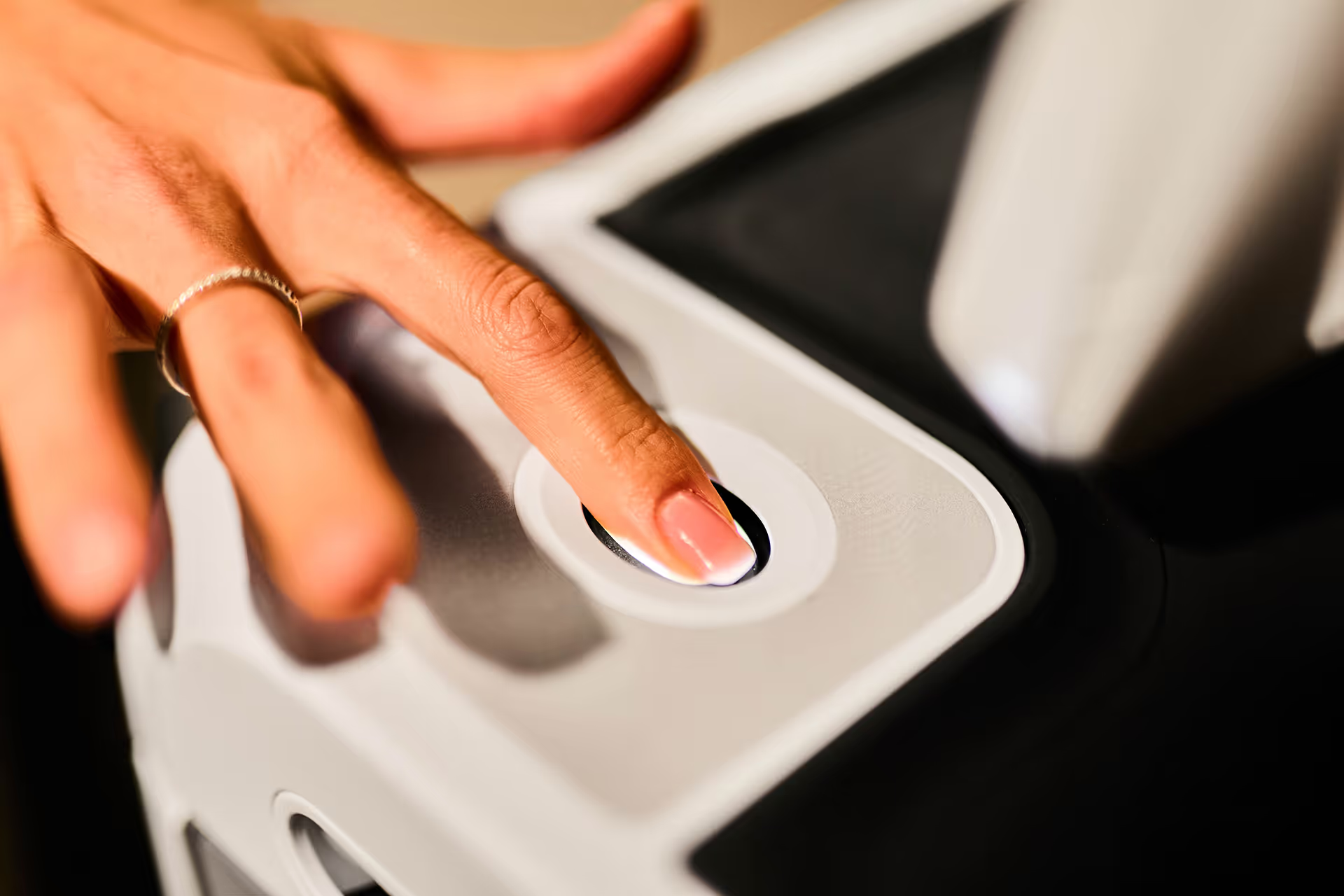
Automated, digital systems—like MyCUBEX powered by MashuraOS—integrate digital logging and user access controls directly into controlled substance dispensing and automated inventory workflows. Every transaction is captured individually and automatically. Records are securely stored in the cloud, and compliance reports are instantly available for internal as well as external audits needs. Electronic logs reduce errors, eliminate redundant paperwork, and provide real-time data and transparency across your hospital.
Key Requirements for DEA Logging
To remain DEA compliant, controlled substance logs opened container logs must be updated immediately after every transaction. They must include required information as set forth in 21 CFR 1304.11, including the controlled substance name, strength, dosage, form, container size, date of transaction, patient name, patient ID, reason for dispensing, individual dispensing, witness, amount dispensed, amount administered, any amount wasted, remaining balance, any notes, etc.
DEA logs must be organized and maintained chronologically separated out by controlled substance retained at the registered location of record for the current two-year period (or longer depending on the state where you practice). Failure to meet DEA recordkeeping requirements pertaining to controlled substance logs can result in costly consequences.
How to Maintain Accurate DEA Logs
Maintaining accurate DEA logs is all about accuracy, consistency, organization and clear procedures. Promote team accountability by creating controlled substance logging standard operating procedures for employees to follow to ensure complaint procedures are followed properly the same way, every time.. By following DEA logging SOPs, your practice will have a documented road map to ensuring its logs are accurate, complete, and audit-ready.
Step 1: Establish Standard Procedures
Define clear, written protocols for recording every controlled substance transaction, including receiving, dispensing, and disposal.
Step 2: Assign Responsibility
Designate specific staff members to oversee specific controlled substance logs tasks so that accountability is shared and clearly defined.
Step 3: Perform Routine Counts
Schedule regular physical inventory counts to confirm that on-hand quantities match what’s documented in the log.
Step 4: Use Cross-Verification
Anytime that controlled substance reconciliations are conducted wherein physical inventory counts are compared against what is reflected in your DEA logs, always have at least two authorized staff members present t for verification purposes. Always make sure to document reconciliations and maintain a record of reconciliations conducted.
Step 5: Foster a Culture of Accuracy
Encourage staff training, transparency, and accountability on all controlled substance logging processes so that DEA compliance becomes a daily habit rather than a stressful event.
Common DEA Log Mistakes to Avoid
Controlled substance logs are critical to DEA compliance, yet many DEA registrants unintentionally make errors that put their licenses and reputations at risk. By recognizing these pitfalls, practices can take proactive steps—and use systems like CUBEX—to keep records accurate and audits stress-free. These could include:
- Incomplete entries: Missing details like drug name, strength, date, or provider can leave gaps in your records.
- Illegible handwriting: Paper logs that are hard to read can raise red flags during audits.
- Delayed updates: Waiting until the end of the day (or week) to log transactions increases the chance of inaccuracies.
- Skipped counts: Overlooking routine cycle counts makes it harder to spot theft, diversion, or inventory errors.
- Unresolved discrepancies: Failing to investigate mismatched records quickly can lead to compliance violations.
With CUBEX, every transaction is tracked automatically, reporting is handled in real time, and audit-ready records are always at your fingertips—helping your hospital avoid common mistakes and stay confidently compliant.
DEA Logs and the Cycle Counting Process
Controlled substance logging is closely connected to the cycle counting process used in inventory management. Cycle counting ensures that high-value items and controlled substances are counted more frequently and with greater accuracy than lower-risk items. Through ABC analysis, practices can determine which items need more frequent reviews and adjust their counting schedules accordingly. By applying cycle counting techniques to controlled substance logs, hospitals can ensure that discrepancies are identified earlier and corrected before they negatively impact compliance.
Benefits of Automating DEA Logging
Manual controlled substance logs demand time and attention, yet they are still vulnerable to mistakes. Automating the process solves many of these challenges. Automated controlled substance logs eliminate the risk of human error, provide real-time visibility into controlled substance usage, and make audits faster and more efficient by offering instant access to complete, accurate records. They also enhance security by creating a clear record of accountability for high-value substances. CUBEX’s automated solutions are designed to simplify controlled substance logging, giving veterinary hospitals the confidence that their compliance and inventory accuracy are fully under control.
General Controlled Substance Log Compliance Information
A controlled substance log is used to track all transactions involving controlled substances in order to meet DEA regulations. Any hospital or facility that handles controlled substances, including veterinary hospitals, is required to maintain them. Controlled substance logs must be updated immediately after each transaction rather than at the end of the day. Automated, digital logs help hospitals achieve compliance, provided they meet DEA standards for accuracy, security, and accessibility. By regulation, DEA controlled substance logs must be retained for the current two-year period, provided you may have to keep them longer depending on the state where you practice.
Simplify DEA Compliance With CUBEX
Managing DEA compliance can be complex, but with the right systems, it doesn’t have to be overwhelming. At CUBEX, we provide automated solutions that reduce challenges associated with manual logging, and help to minimize errors to keep your hospital compliant and protected.
Stay compliant. Stay accurate. Stay protected with CUBEX.
About CUBEX
CUBEX is an automated inventory management platform for veterinary hospitals. Combining secure smart devices with purpose-built software, CUBEX tracks every dispense in real time, supports controlled substance compliance, reduces waste and stockouts, and streamlines replenishment through connected workflows, including integrations with leading PIMS and supplier ordering platforms. The result is less manual work, better inventory control, and more time back for veterinary teams. Learn more →

Proper management of controlled substances is one of the most important responsibilities a DEA registrant has in a veterinary hospital. To stay compliant with Drug Enforcement Administration (DEA) regulations, DEA registrants, and the hospitals they are ordering controlled substances on behalf of, are required to maintain complete and accurate logs of each substance on a current basis (21 CFR 1304.21(a)). Controlled substance logs not only serve as a documented accountability trail, they provide a verification system of checks and balances, allowing physical inventory counts to be reconciled against what is reflected in your logs so that if discrepancies exist they can be identified, investigated and either resolved or reported. When maintained properly, controlled substance logs are a safeguard against drug diversion and recordkeeping violations that help maintain inventory integrity for the betterment of patients and staff.
At the same time, DEA logging is time-consuming and can be hard to keep up with. At CUBEX, we specialize in helping veterinary teams simplify the controlled substance logging process with automated systems that reduce human error, improve accuracy, and keep hospitals inspection-ready at all times.
Understanding Controlled Substance Logs and Their Purpose
Controlled substance logs are a DEA requirement for all DEA registrants that work with them. The requirements for DEA logs are outlined in 21 CFR 1304.11 and 21 CFR 1304.21. These logs are an official record documenting every acquisition, dispensing and disposal of controlled substances for a DEA registrant. They must be maintained in “real-time, chronologically for the current two-year period in a manner that is “readily retrievable” for review at the registered location. Controlled substance logs cannot be “commingled with any other records (like your practice management software records) or logs for non-federally scheduled drugs even if they are scheduled as a controlled substance by the state you practice in. DEA logs must be separated out by each controlled substance (ex: ketamine log, buprenorphine log, tramadol log etc.) and tracked by specific controlled substance container from the point of opening and every instance of usage until the time the container is depleted (no running logs). Schedule II controlled substance logs must also be separated out from schedule III-V controlled substance logs.
Controlled substance logs are a DEA regulatory requirement designed to ensure accountability and prevent diversion. For veterinary hospitals, DEA logs serve as both a recordkeeping tool and an inventory management safeguard.
The Evolution of Controlled Substance Logs
- Early Paper Ledgers (1970s–1980s)
- After the Controlled Substances Act of 1970, hospitals and pharmacies were required to keep written records of every controlled drug received, dispensed, and disposed.
- Paper logbooks were the standard, but they were time-consuming and vulnerable to errors, loss, or tampering.
- Manual to Digital Transition (1990s–2000s)
- As personal computers became common, some practices shifted to spreadsheets or basic practice management software.
- While this improved legibility and reporting, data still had to be entered by hand, leaving room for mistakes.
- Integration with Practice Management Systems (2000s–2010s)
- Vendors began linking DEA recordkeeping to billing, scheduling, and inventory modules.
- However, integration was often partial, requiring multiple logins or duplicate data entry.
- Regulatory Expansion (2010s)
- States introduced Prescription Drug Monitoring Programs (PDMPs) to combat opioid misuse. Hospitals now had to submit controlled drug data electronically and on strict timelines, adding more administrative burden.
- Cloud & IoT-Enabled Platforms (Today)
- Platforms like MyCUBEX powered by MashuraOS integrate directly with smart cabinets, PDMPs (e.g., PMP AWARxE), and practice management systems.
- Every transaction is logged automatically, data is transmitted in real time, and compliance is built into daily workflows.
- This shift reduces paperwork, prevents diversion, and ensures hospital are inspection-ready at all times.
Why Controlled Substance Logs Are Essential in Veterinary Medicine
Most veterinarians prescribe, administer, and dispense controlled substances on a regular basis; ranging from anesthetics to pain relievers. Failing to comply with DEA controlled substance logging requirements exposes DEA registrants and the hospitals that operate under them to potential administrative, civil, and in some cases criminal actions in the form of penalties, citations or loss of registration/license when failure to maintain required records is associated with drug diversion or patient harm.
“Poor recordkeeping” is a leading DEA violation for a reason because it is easy to cite. The good news is that it is also avoidable. By keeping up with controlled substance logging and maintaining complete and accurate logs, veterinarians protect their hospitals and licenses as well as their reputations.
Types of DEA Controlled Substance Logs
Keeping accurate DEA logs is a critical component of DEA compliance, accountability, and patient safety. When it comes to controlled substance logs, veterinary hospitals typically use one or more of the following formats:
Manual Log Books
Also known as “manual” log books. This is the traditional, paper-based method wherein controlled substance information is entered via handwritten log entries onto logsheets to include all DEA-required information for each controlled substance by container, with a starting container balance and log entries for each usage instance and a remaining balance until the container is finished. While many manual log books are DEA-compliant and perfectly fine to use, manual log books can be time-consuming, are less likely to promote “real-time entries" and have been found to be more prone to human error than automated systems.
Electronic Controlled Substance Logs
Electronic controlled substance logs are designed to eliminate the manual entry aspect of controlled substance logbooks by adding electronic tracking and management. However, despite various features offered by these systems, the lack of automated dispensing tied to individual user access controls, still requires proper “real-time” data entry; leading to ongoing workflow disruptions within veterinary hospitals. Additionally, while electronic controlled substance logs help with the manual aspect of logging, they do not provide security controls during the actual process of controlled substance dispensing, which continues to be a primary concern throughout the industry.
Automated Digital Controlled Substance Logs
Automated, digital systems—like MyCUBEX powered by MashuraOS—integrate digital logging and user access controls directly into controlled substance dispensing and automated inventory workflows. Every transaction is captured individually and automatically. Records are securely stored in the cloud, and compliance reports are instantly available for internal as well as external audits needs. Electronic logs reduce errors, eliminate redundant paperwork, and provide real-time data and transparency across your hospital.
Key Requirements for DEA Logging
To remain DEA compliant, controlled substance logs opened container logs must be updated immediately after every transaction. They must include required information as set forth in 21 CFR 1304.11, including the controlled substance name, strength, dosage, form, container size, date of transaction, patient name, patient ID, reason for dispensing, individual dispensing, witness, amount dispensed, amount administered, any amount wasted, remaining balance, any notes, etc.
DEA logs must be organized and maintained chronologically separated out by controlled substance retained at the registered location of record for the current two-year period (or longer depending on the state where you practice). Failure to meet DEA recordkeeping requirements pertaining to controlled substance logs can result in costly consequences.
How to Maintain Accurate DEA Logs
Maintaining accurate DEA logs is all about accuracy, consistency, organization and clear procedures. Promote team accountability by creating controlled substance logging standard operating procedures for employees to follow to ensure complaint procedures are followed properly the same way, every time.. By following DEA logging SOPs, your practice will have a documented road map to ensuring its logs are accurate, complete, and audit-ready.
Step 1: Establish Standard Procedures
Define clear, written protocols for recording every controlled substance transaction, including receiving, dispensing, and disposal.
Step 2: Assign Responsibility
Designate specific staff members to oversee specific controlled substance logs tasks so that accountability is shared and clearly defined.
Step 3: Perform Routine Counts
Schedule regular physical inventory counts to confirm that on-hand quantities match what’s documented in the log.
Step 4: Use Cross-Verification
Anytime that controlled substance reconciliations are conducted wherein physical inventory counts are compared against what is reflected in your DEA logs, always have at least two authorized staff members present t for verification purposes. Always make sure to document reconciliations and maintain a record of reconciliations conducted.
Step 5: Foster a Culture of Accuracy
Encourage staff training, transparency, and accountability on all controlled substance logging processes so that DEA compliance becomes a daily habit rather than a stressful event.
Common DEA Log Mistakes to Avoid
Controlled substance logs are critical to DEA compliance, yet many DEA registrants unintentionally make errors that put their licenses and reputations at risk. By recognizing these pitfalls, practices can take proactive steps—and use systems like CUBEX—to keep records accurate and audits stress-free. These could include:
- Incomplete entries: Missing details like drug name, strength, date, or provider can leave gaps in your records.
- Illegible handwriting: Paper logs that are hard to read can raise red flags during audits.
- Delayed updates: Waiting until the end of the day (or week) to log transactions increases the chance of inaccuracies.
- Skipped counts: Overlooking routine cycle counts makes it harder to spot theft, diversion, or inventory errors.
- Unresolved discrepancies: Failing to investigate mismatched records quickly can lead to compliance violations.
With CUBEX, every transaction is tracked automatically, reporting is handled in real time, and audit-ready records are always at your fingertips—helping your hospital avoid common mistakes and stay confidently compliant.
DEA Logs and the Cycle Counting Process
Controlled substance logging is closely connected to the cycle counting process used in inventory management. Cycle counting ensures that high-value items and controlled substances are counted more frequently and with greater accuracy than lower-risk items. Through ABC analysis, practices can determine which items need more frequent reviews and adjust their counting schedules accordingly. By applying cycle counting techniques to controlled substance logs, hospitals can ensure that discrepancies are identified earlier and corrected before they negatively impact compliance.
Benefits of Automating DEA Logging
Manual controlled substance logs demand time and attention, yet they are still vulnerable to mistakes. Automating the process solves many of these challenges. Automated controlled substance logs eliminate the risk of human error, provide real-time visibility into controlled substance usage, and make audits faster and more efficient by offering instant access to complete, accurate records. They also enhance security by creating a clear record of accountability for high-value substances. CUBEX’s automated solutions are designed to simplify controlled substance logging, giving veterinary hospitals the confidence that their compliance and inventory accuracy are fully under control.
General Controlled Substance Log Compliance Information
A controlled substance log is used to track all transactions involving controlled substances in order to meet DEA regulations. Any hospital or facility that handles controlled substances, including veterinary hospitals, is required to maintain them. Controlled substance logs must be updated immediately after each transaction rather than at the end of the day. Automated, digital logs help hospitals achieve compliance, provided they meet DEA standards for accuracy, security, and accessibility. By regulation, DEA controlled substance logs must be retained for the current two-year period, provided you may have to keep them longer depending on the state where you practice.
Simplify DEA Compliance With CUBEX
Managing DEA compliance can be complex, but with the right systems, it doesn’t have to be overwhelming. At CUBEX, we provide automated solutions that reduce challenges associated with manual logging, and help to minimize errors to keep your hospital compliant and protected.
Stay compliant. Stay accurate. Stay protected with CUBEX.