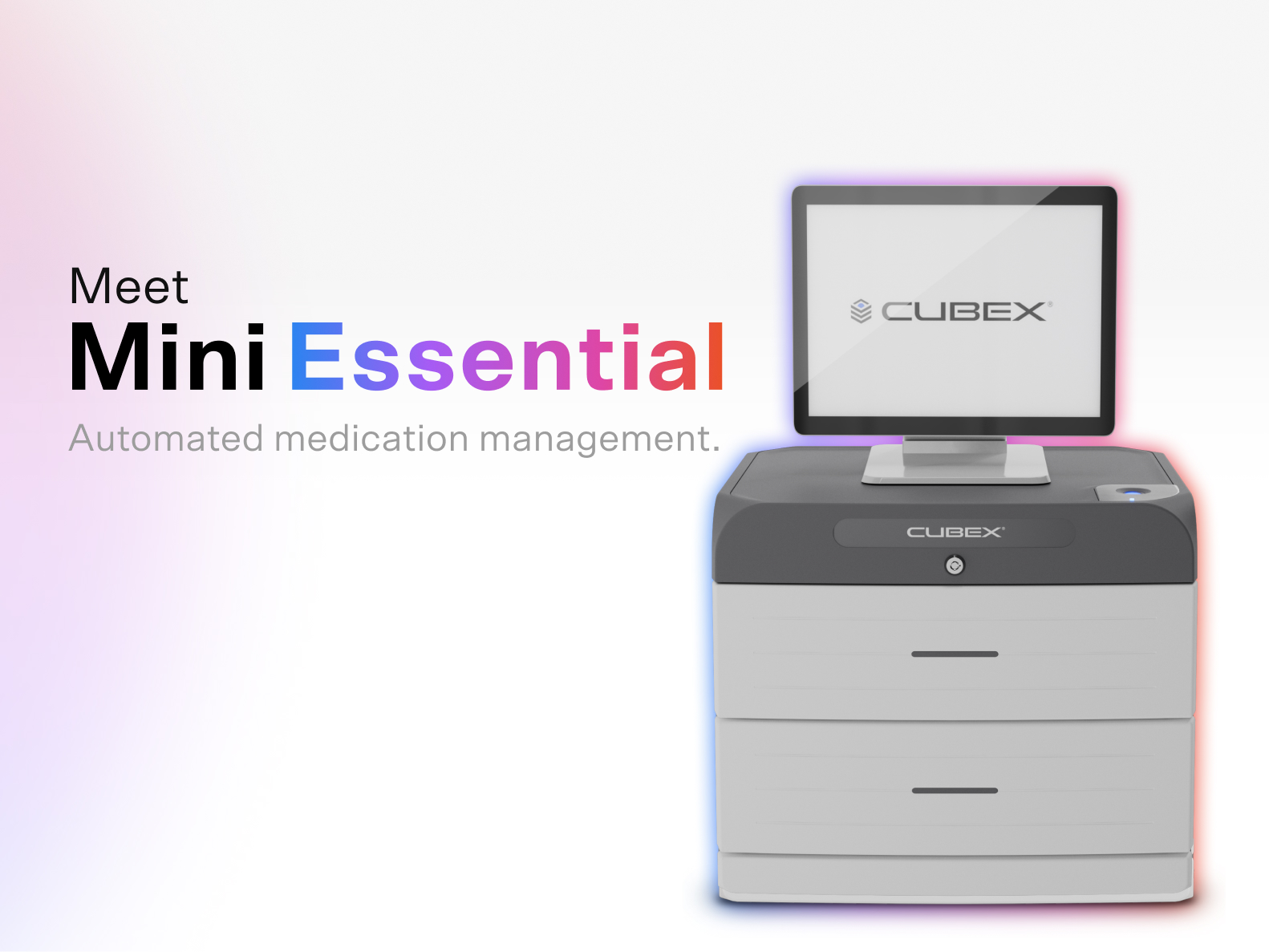
Stay tune we are working on a great experience for you.
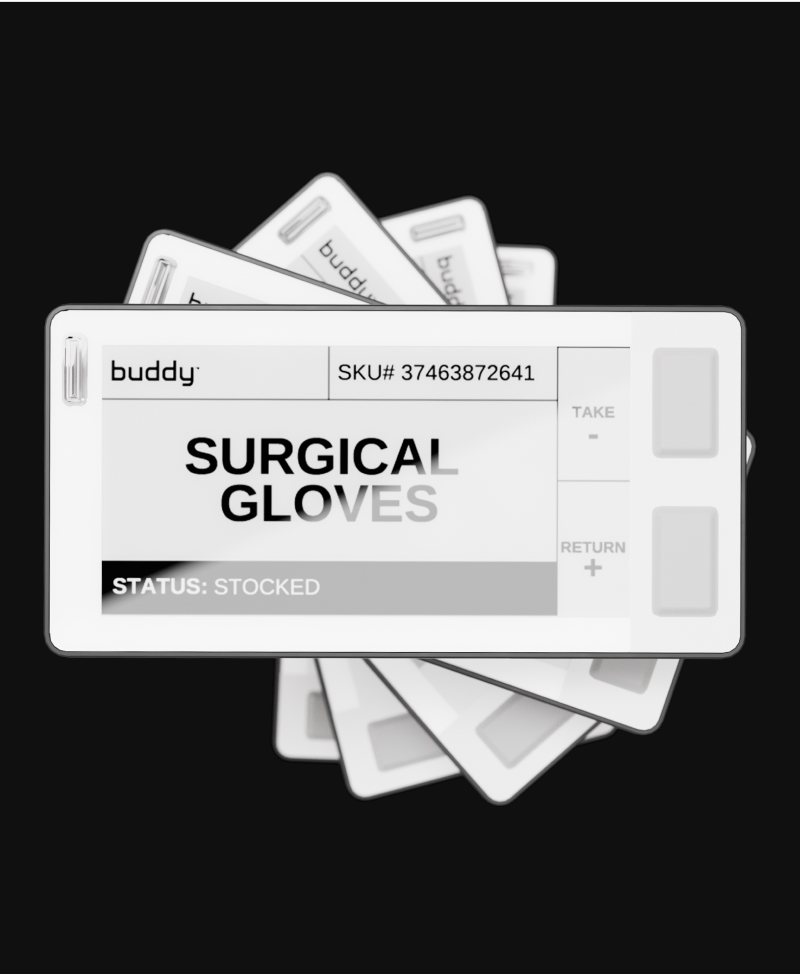

Join our exclusive FREE webinar!
Industry Drug Abuse & Compliance
With Ali Cooper, CUBEX® Senior Director of Corporate Accounts.
Tuesday, 11/18, 2025 at 11:00 am PT | 12:00 pm MST | 1:00 pm CST | 2:00 pm EST


Stay tune we are working on a great experience for you.
Join our exclusive FREE webinar!
Industry Drug Abuse & Compliance
With Ali Cooper, CUBEX® Senior Director of Corporate Accounts.
Tuesday, 11/18, 2025 at 11:00 am PT | 12:00 pm MST | 1:00 pm CST | 2:00 pm EST


Growth creates complexity.
As veterinary organizations expand across multiple hospitals, the systems and processes that once worked effectively become increasingly difficult to manage. Different workflows, inconsistent standards, disconnected systems, and limited visibility create information silos that challenge scalability and operational performance.
For many veterinary platforms, pharmacy and supply represent one of the largest controllable expenses in the organization—and one of the least visible. Without a connected strategy, inventory losses, charge capture leakage, compliance gaps, and administrative inefficiencies quietly accumulate across the business, impacting profitability and enterprise value.
Increasingly, leading operators are recognizing that enterprise inventory management is not simply software. It is foundational infrastructure for scalable growth.
Growth Creates Information Silos
As organizations acquire hospitals, local workflows often evolve independently. Ordering processes, medication storage, charge capture procedures, and inventory controls vary from site to site, creating fragmented processes and inconsistent data.
These silos make it difficult for leaders to answer important questions:
- Where are inventory losses occurring?
- How much revenue is being missed?
- Are hospitals following enterprise standards?
- Where are compliance risks emerging?
- How efficiently is working capital being utilized?
Without centralized visibility, organizations are often managing one of their largest expenses with incomplete information.
Pharmacy and Supply Are Strategic Assets
Pharmacy and supply are among the largest controllable expenses within veterinary medicine and one of the greatest opportunities for operational improvement.
Yet many organizations continue to rely on manual processes and disconnected systems.
The consequences include:
- Inventory shrinkage and expiration.
- Lost charge capture.
- Excess inventory investment.
- Duplicate purchasing.
- Higher labor costs.
- Compliance exposure.
These inefficiencies quietly erode margin before it ever reaches EBITDA.
Software Alone Cannot Solve the Problem
Inventory management is more than a software challenge.
Controlled substances, treatment medications, and high-value inventory require secure storage, controlled access, and complete accountability. Software alone cannot provide the level of security and traceability required to support enterprise operations.
True enterprise inventory management combines intelligent inventory control devices with cloud software to create a closed-loop ecosystem.
Secure point-of-care devices provide permission-based access and transaction-level accountability, while centralized software delivers visibility, workflow automation, analytics, and reporting.
Together, they improve:
- Controlled substance security.
- DEA compliance.
- Medication accountability.
- Charge capture.
- Treatment readiness.
- Workflow consistency.
Creating a Closed-Loop Inventory Ecosystem
Enterprise inventory management becomes even more powerful when connected to the broader technology stack.
By integrating with practice management systems, supplier networks, procurement applications, financial systems, and data warehouses, organizations can create a closed-loop inventory strategy that software alone cannot deliver.
These connected workflows enable:
- Automated dispensing and replenishment.
- Charge capture reconciliation.
- Inventory valuation.
- Expiration management.
- Purchasing workflows.
- Enterprise analytics.
- Benchmarking and COGS optimization.
The result is a single source of truth across controlled substances, treatment, pharmacy, and supply.
Human Healthcare Established the Standard
This model is not new.
Human healthcare has relied on automated dispensing and enterprise inventory management for more than thirty-five years, with over 97 percent of hospitals utilizing these technologies today.
The same forces that drove adoption in human healthcare are now reshaping veterinary medicine:
- Regulatory pressure.
- Staffing shortages.
- Margin compression.
- Operational complexity.
- Consolidation and private equity ownership.
Leading veterinary platforms and consolidators have already begun adopting enterprise inventory management as a strategic component of their operating model.
Operational Excellence Supports Better Medicine
This transformation is not about profit over care.
Operational excellence enables better medicine.
Automation and standardization reduce administrative burden, medication search time, and workflow friction while improving treatment readiness and medication safety. Clinical teams spend less time managing inventory and more time focused on patients.
At the same time, organizations strengthen compliance, improve charge capture, lower operating costs, and build more scalable operations.
Operational sustainability ultimately funds better care.
The Bottom Line
As veterinary organizations continue to grow, profitability depends increasingly on operational precision rather than scale alone.
By combining intelligent inventory control devices, cloud software, and integrated workflows across practice management, supplier, procurement, and financial systems, veterinary platforms can create a closed-loop inventory ecosystem that delivers visibility, accountability, and scalability that software alone cannot achieve.
Enterprise inventory management is no longer simply an inventory solution.
It has become the foundation for operational excellence, patient-centric care, regulatory compliance, and long-term enterprise growth.
About CUBEX
CUBEX is an automated inventory management platform for veterinary hospitals. Combining secure smart devices with purpose-built software, CUBEX tracks every dispense in real time, supports controlled substance compliance, reduces waste and stockouts, and streamlines replenishment through connected workflows, including integrations with leading PIMS and supplier ordering platforms. The result is less manual work, better inventory control, and more time back for veterinary teams. Learn more →

Growth creates complexity.
As veterinary organizations expand across multiple hospitals, the systems and processes that once worked effectively become increasingly difficult to manage. Different workflows, inconsistent standards, disconnected systems, and limited visibility create information silos that challenge scalability and operational performance.
For many veterinary platforms, pharmacy and supply represent one of the largest controllable expenses in the organization—and one of the least visible. Without a connected strategy, inventory losses, charge capture leakage, compliance gaps, and administrative inefficiencies quietly accumulate across the business, impacting profitability and enterprise value.
Increasingly, leading operators are recognizing that enterprise inventory management is not simply software. It is foundational infrastructure for scalable growth.
Growth Creates Information Silos
As organizations acquire hospitals, local workflows often evolve independently. Ordering processes, medication storage, charge capture procedures, and inventory controls vary from site to site, creating fragmented processes and inconsistent data.
These silos make it difficult for leaders to answer important questions:
- Where are inventory losses occurring?
- How much revenue is being missed?
- Are hospitals following enterprise standards?
- Where are compliance risks emerging?
- How efficiently is working capital being utilized?
Without centralized visibility, organizations are often managing one of their largest expenses with incomplete information.
Pharmacy and Supply Are Strategic Assets
Pharmacy and supply are among the largest controllable expenses within veterinary medicine and one of the greatest opportunities for operational improvement.
Yet many organizations continue to rely on manual processes and disconnected systems.
The consequences include:
- Inventory shrinkage and expiration.
- Lost charge capture.
- Excess inventory investment.
- Duplicate purchasing.
- Higher labor costs.
- Compliance exposure.
These inefficiencies quietly erode margin before it ever reaches EBITDA.
Software Alone Cannot Solve the Problem
Inventory management is more than a software challenge.
Controlled substances, treatment medications, and high-value inventory require secure storage, controlled access, and complete accountability. Software alone cannot provide the level of security and traceability required to support enterprise operations.
True enterprise inventory management combines intelligent inventory control devices with cloud software to create a closed-loop ecosystem.
Secure point-of-care devices provide permission-based access and transaction-level accountability, while centralized software delivers visibility, workflow automation, analytics, and reporting.
Together, they improve:
- Controlled substance security.
- DEA compliance.
- Medication accountability.
- Charge capture.
- Treatment readiness.
- Workflow consistency.
Creating a Closed-Loop Inventory Ecosystem
Enterprise inventory management becomes even more powerful when connected to the broader technology stack.
By integrating with practice management systems, supplier networks, procurement applications, financial systems, and data warehouses, organizations can create a closed-loop inventory strategy that software alone cannot deliver.
These connected workflows enable:
- Automated dispensing and replenishment.
- Charge capture reconciliation.
- Inventory valuation.
- Expiration management.
- Purchasing workflows.
- Enterprise analytics.
- Benchmarking and COGS optimization.
The result is a single source of truth across controlled substances, treatment, pharmacy, and supply.
Human Healthcare Established the Standard
This model is not new.
Human healthcare has relied on automated dispensing and enterprise inventory management for more than thirty-five years, with over 97 percent of hospitals utilizing these technologies today.
The same forces that drove adoption in human healthcare are now reshaping veterinary medicine:
- Regulatory pressure.
- Staffing shortages.
- Margin compression.
- Operational complexity.
- Consolidation and private equity ownership.
Leading veterinary platforms and consolidators have already begun adopting enterprise inventory management as a strategic component of their operating model.
Operational Excellence Supports Better Medicine
This transformation is not about profit over care.
Operational excellence enables better medicine.
Automation and standardization reduce administrative burden, medication search time, and workflow friction while improving treatment readiness and medication safety. Clinical teams spend less time managing inventory and more time focused on patients.
At the same time, organizations strengthen compliance, improve charge capture, lower operating costs, and build more scalable operations.
Operational sustainability ultimately funds better care.
The Bottom Line
As veterinary organizations continue to grow, profitability depends increasingly on operational precision rather than scale alone.
By combining intelligent inventory control devices, cloud software, and integrated workflows across practice management, supplier, procurement, and financial systems, veterinary platforms can create a closed-loop inventory ecosystem that delivers visibility, accountability, and scalability that software alone cannot achieve.
Enterprise inventory management is no longer simply an inventory solution.
It has become the foundation for operational excellence, patient-centric care, regulatory compliance, and long-term enterprise growth.