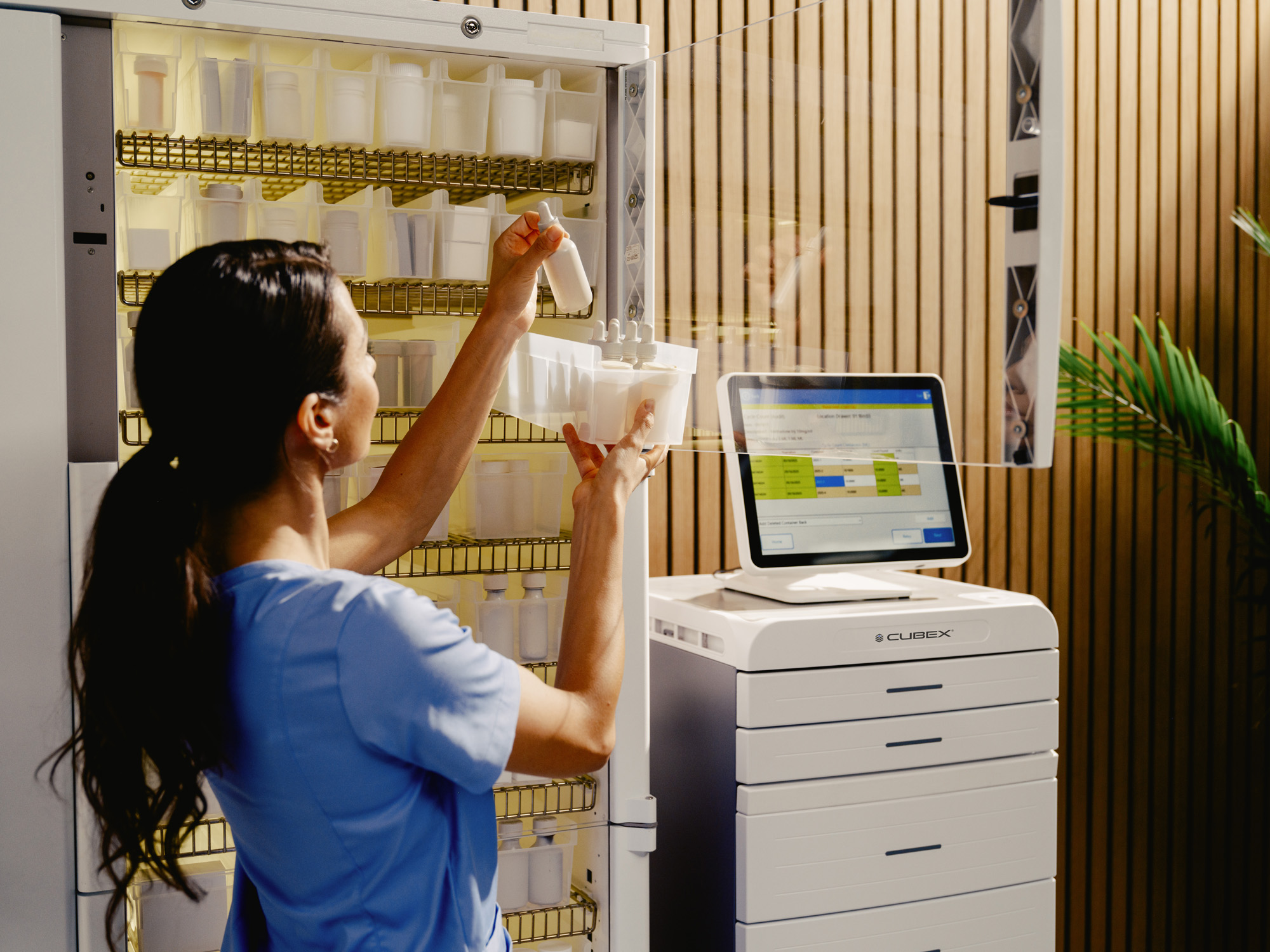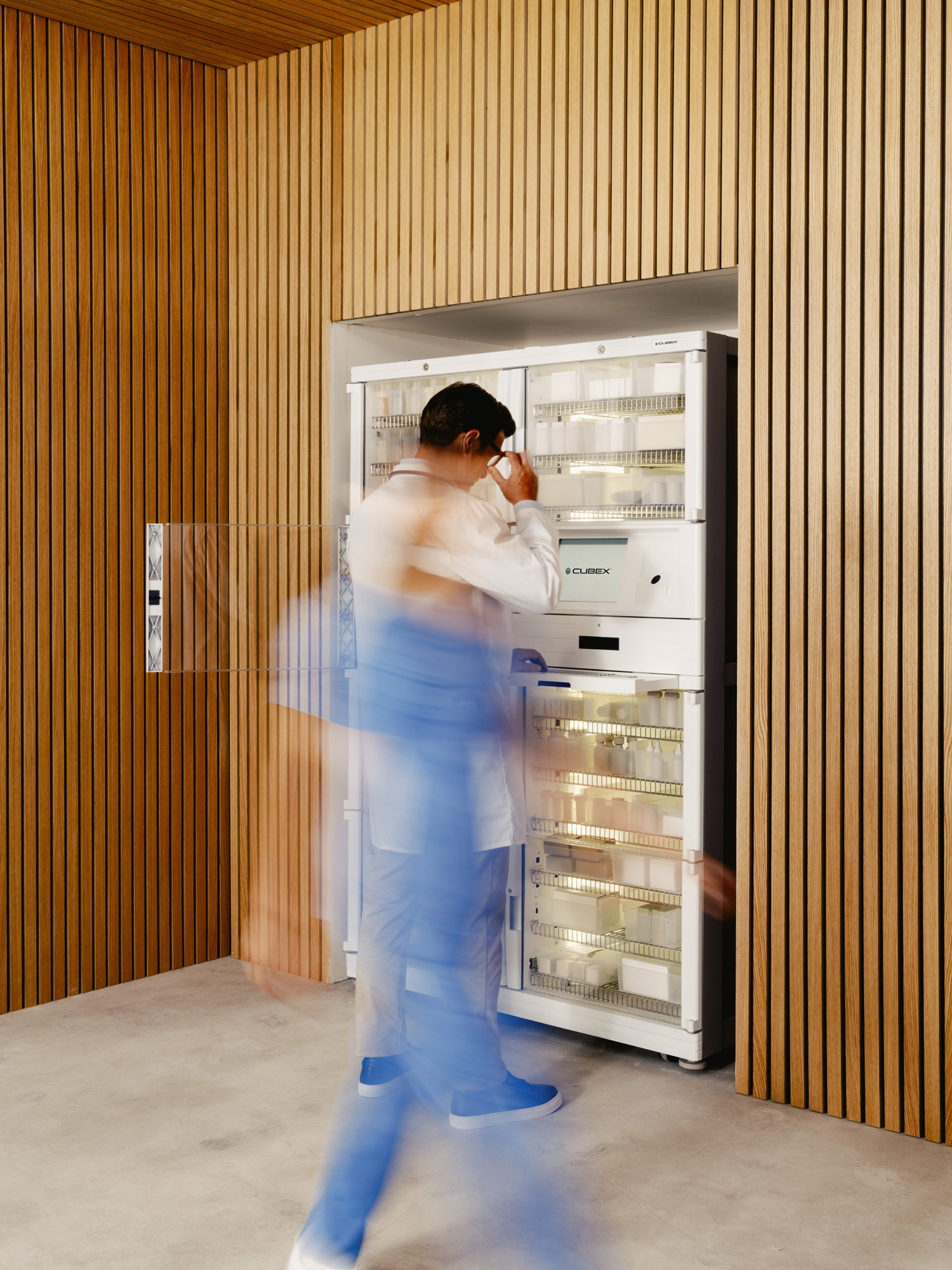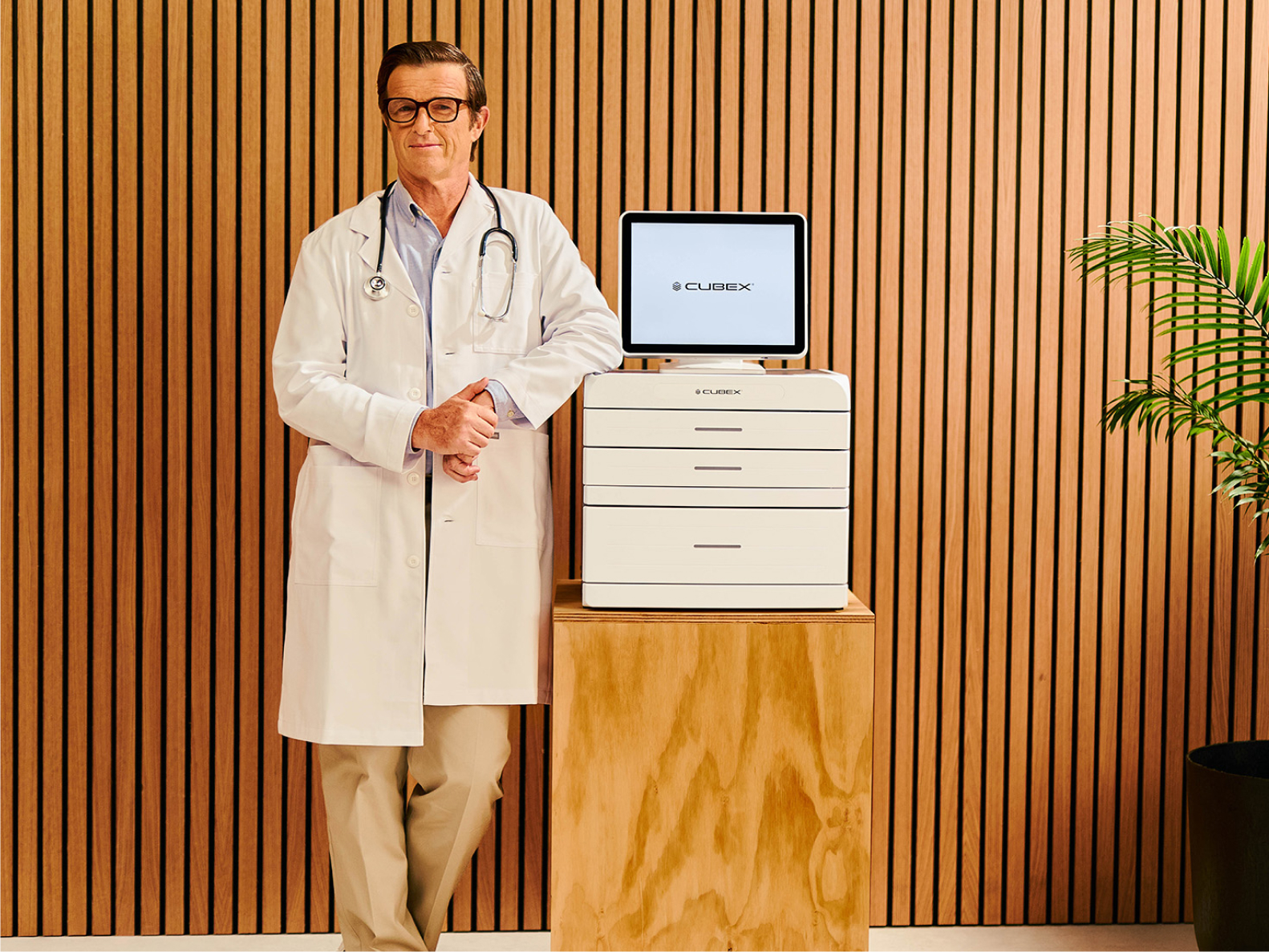
For most small clinics, yes. A smart cabinet, sometimes called an automated dispensing system, controls who can take what and records each item as it's taken. Smart cabinets have a reputation for being big, expensive, and hard to set up. The Mini Essential from Cubex is compact, preconfigured, and priced for small clinics.
What is a smart cabinet, and how is it different from software?
A smart cabinet is locked storage that controls who can open it and records every item taken: who took it, for which patient, and when. Human hospitals call the same idea an automated dispensing system or automated dispensing cabinet. Veterinary teams usually say smart cabinet.
Software-only tools track inventory too, but they depend on staff typing in what they used. That works if every entry gets made, every time. In a small clinic, that's the same few people doing it between patients. When an entry gets missed, the count is wrong, and often so is the invoice. Nothing in the software knows the difference.
A smart cabinet records the transaction as part of taking the item. Staff don't log it after the fact, because taking it is the log. For a full comparison, see software-only vs hardware-based systems.
Software-only tools have traditionally been the cheaper place to start. That's no longer a given.
Why do small clinics think smart cabinets aren't for them?
Because smart cabinets have a reputation as big-hospital equipment: large, expensive, and a project to install. With fewer people, fewer items, and less space, a spreadsheet, a binder, or a basic software tool feels like enough.
But a small clinic doesn't carry simpler inventory. It carries the same kinds a big hospital does: controlled substances, treatment injectables, drugs of concern, pharmacy items, refrigerated items, and supplies. It just has fewer people to manage them.
Usually it's one person. A practice manager or a technician runs inventory on top of everything else. They know where everything is, what's running low, and what still needs to be logged. That works until they're out sick, it's a busy week, or they leave. Then the process leaves with them.
When does a smart cabinet make sense for a small clinic?
There's no clinic size where a smart cabinet suddenly makes sense. Look at what your current process is doing instead. These are the signs:
- Counts take hours every week, or they don't happen as often as they should because nobody has the time.
- Charges get missed because the item and the invoice live in two different places.
- Product expires on the shelf, or something runs out in the middle of a case.
- One person holds the whole process in their head.
- Logs get caught up at the end of the day instead of when the item is used.
If several of these sound familiar, you're already paying for not having a smart cabinet, in staff time and missed charges.
How does a smart cabinet protect your controlled substances?
A small team doesn't change what controlled substances need: secure storage, a record of every dose, and a count that matches. In many small clinics, that means a lockbox, a shared key or code, and a log someone fills in by hand. The record is only as good as the person writing it, and when the count is off, there's no easy way to tell what happened.
A smart cabinet closes those gaps:
- Security. Only authorized staff can open it, with a fingerprint. No shared codes, no keys in a drawer.
- Chain of custody. Every access is tied to a named user, a patient, a quantity, and a time. The trail from the shelf to the patient is recorded as the work happens, not rebuilt later.
- Drug logs. Drug logs fill themselves in at the point of care, which supports compliance without anyone writing it down later. Software can store a log, but someone still has to type it in.
- Safety. With Cubex, the software confirms the right patient, the right drug, and the right dose at the point of dispense.
- Discrepancies. Taking an item and counting it are the same action, so a count that's off shows up when it happens, not at the end of the month.
That's the biggest difference between a smart cabinet and a lockbox with software, and for a lot of small clinics it's the reason to bring one in. Compliance stays your hospital's responsibility. A smart cabinet supports it by recording every access as it happens.

Is a smart cabinet too big or too complicated for a small clinic?
No. A small clinic doesn't need a wall of smart cabinets. Start with one, in one area, and add more when you're ready.
For most clinics, the treatment area is the place to start, with the pharmacy next. That's where the items that need the most oversight get used, and where a missed entry costs the most.
That's what the Mini Essential is built for. It manages controlled substances, drugs of concern, and the injectables used in routine procedures. It has the smallest footprint in the Cubex lineup, it's priced for small clinics, and it comes preconfigured, so it arrives with its drawers set up and your formulary loaded. Setting it up is as simple as turning it on, going through the onboarding flow, and loading your products.
Day to day, it works the same way for everyone:
- Staff log in with a fingerprint.
- They select the patient, the item, and the quantity.
- They take what they need, and the smart cabinet records it.
- When stock runs low, it creates a purchase order for your team to approve.
Add CubexConnect and the Mini Essential connects to your practice management system both ways, so each dispense updates the patient record and lands on the invoice. And because every step is the same no matter who's on shift, the process doesn't depend on one person anymore.
The Mini Essential is also the first step onto the Cubex platform. When you're ready, the pharmacy, refrigerated items, and supplies can run on the same platform, the same way.
Is a smart cabinet worth the cost for a small clinic?
Price is the easy number. The harder one is what your current process already costs. Add up:
- Hours spent counting, ordering, and reconciling
- Product that expired on the shelf
- Items that were used but never billed
- Rush orders when something ran out
In a small clinic, each of those hits harder. The person counting is often the same person who should be with a patient, and every missed charge comes out of a smaller margin. For more on finding those gaps, see how inventory data shows where costs go.
There's a longer-term value too. If you plan to sell your clinic someday, a buyer will ask how it runs, and inventory is part of that. A clinic where every item is recorded as it's taken is easier to hand over than one that runs on one person's habits.
Before you decide, run through the questions to ask before you buy, and weigh the cost against what you're spending now.
Where should a small clinic start?
Write down the inventory problem that bothers you most, and find where it lives. For most small clinics, that's the treatment area. Put a smart cabinet there first, get it working, then decide what's next.
Cubex is an automated inventory management platform for veterinary hospitals. The Mini Essential gives small clinics a preconfigured place to start, and the platform grows with you from there.
Frequently asked questions

About CUBEX
CUBEX is an automated inventory management platform for veterinary hospitals. Combining secure smart devices with purpose-built software, CUBEX tracks every dispense in real time, supports controlled substance compliance, reduces waste and stockouts, and streamlines replenishment through connected workflows, including integrations with leading PIMS and supplier ordering platforms. The result is less manual work, better inventory control, and more time back for veterinary teams. Learn more →