Choosing an inventory management system for your veterinary hospital comes down to a few questions. Does it record usage when items are taken? Does that usage become a charge? Does it reorder on its own? Does it connect to the systems you already run? The right system is the one your team doesn't have to work around.
What should a veterinary inventory system actually do?
An inventory system's real job is patient care. Human hospitals run on a simple rule: the right item, in the right place, at the right time. If you go in with a broken leg, the hospital can't be out of what it needs to treat you. Veterinary hospitals are no different. When a patient is on the table, the team needs what they need, where they expect it, without stopping to think about it.
Everything else follows from that. To keep the right items in the right place, the system has to keep an accurate count of what you have, what you used, and what you need, without adding work for your team. Reports, reorders, and charges all depend on that count being right. With Cubex, the software also confirms the right patient, the right drug, and the right dose at the point of dispense. When the system does its job, your team stops thinking about inventory and gets back to patients.
Most hospitals start shopping because something broke. An item isn't there when a patient needs it. Charges keep getting missed. Expired product piles up on a shelf. A manager spends hours every week counting. Maybe someone on the team asked, "Can't we just have AI do this?" Fair question. AI can only work with what gets recorded, and it can't count what nobody wrote down. Name your problem first. It tells you which of the questions below matter most.
What questions should you ask before you buy?
Bring these eight questions to every vendor. The answers will sort the options quickly.
1. Does it record usage when items are taken, or after?
This is the question that matters most. Some systems depend on staff typing in what they used after the fact. Every missed entry is a wrong count, and often a missed charge. A digital log that depends on someone remembering has the same weak spot as paper.
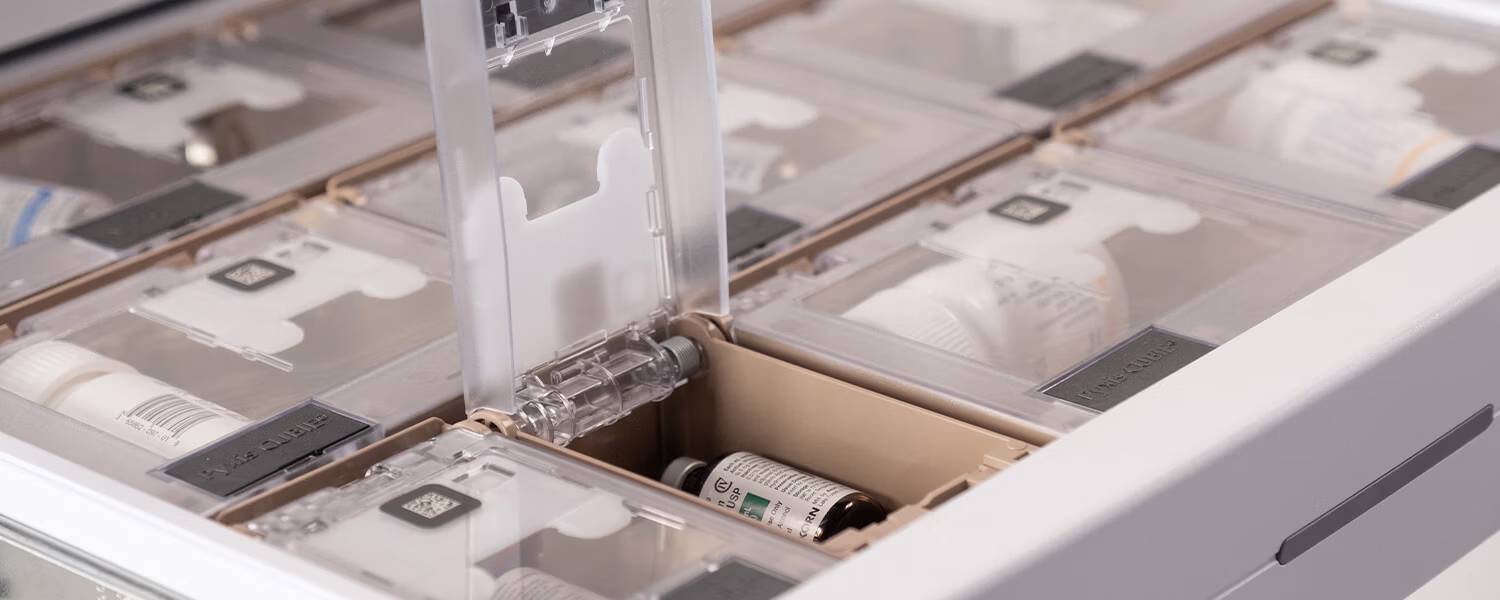
Systems that pair software with smart cabinets record the transaction as part of taking the item. With Cubex, staff log in, select the patient, select the item and quantity, and take what they need. The record is a byproduct of the work instead of a second task after it. For a deeper look, see hardware-based vs software-only systems.
2. What inventory does it cover?
Hospitals carry very different inventory: controlled substances, treatment injectables, drugs of concern, pharmacy items, refrigerated items, and supplies. Ask which of these the system can manage. A tool built for one area leaves you running a second process for the rest.
You don't have to automate everything at once. Most hospitals do best starting in the treatment area, then adding the pharmacy. Just make sure the system can grow into the rest.
3. Does it connect to your practice management system?
Your practice management system is where usage becomes an invoice. If the inventory system doesn't talk to it, someone has to re-enter every item used, and some won't make it onto the bill. Ask which systems it connects to, what moves between them, and in which direction.
That last part matters more than most buyers expect. An integration that only reads data, or only sends it one way, still leaves someone moving information by hand. A good integration works both ways: it reads from your other systems and writes back to them. The patient, the charge, the count, and the order stay in sync without anyone re-entering them.
Cubex builds its integrations to work both ways, and connects to the systems hospitals already use: practice management software, distributors, suppliers, and procurement platforms like Vetcove.
4. Can it reorder automatically?
Ask whether the system places orders when stock hits its reorder point, and with whom. If it only sends a reminder, someone still has to write the order.
Cubex connects to distributors, suppliers, and procurement platforms like Vetcove, so reordering can follow the way your hospital already buys. For the reorder points themselves, see how to set them from real usage.
5. Does it keep everyone doing it the same way?
Veterinary hospitals see a lot of turnover, and every new hire learns the process from whoever trains them. Over time, everyone puts their own spin on it. A small difference doesn't look like much on any one shift, but it adds up, the same way a course that's off by one degree ends up miles from where it was headed. Then your best inventory person leaves, and the process leaves with them.
A written SOP only works if everyone follows it. A good system builds the SOP into the work itself. Staff log in, select the patient and the item, and take what they need, the same way every time, no matter who's on shift. That isn't about being strict. It's about consistency, and consistency is what keeps your counts, charges, and orders right.
Speed still matters. Your technicians and nurses pull, administer, and log all shift, so ask to see the workflow from login to done, and time it. If a step feels like extra work, ask what it protects. A step that keeps everyone on the same process is usually worth a few seconds.
6. What reports do you get, and who are they for?
Owners want margin and spend. Managers want to know what to order and what's about to expire. Inventory coordinators want counts they can trust. Ask to see the actual reports, not a list of report names. The useful ones show where your inventory money goes by item, department, and location.
7. Can it make every location run the same way?
Almost every vendor will say their system works across locations. Turning it on at a second site is the easy part. The better question is whether it lets you run every location the same way, and then compare them.
Comparing only works if every site follows the same process. If one hospital counts one way and another does it differently, the numbers don't line up, and you can't tell a real problem from a different habit. When the workflow is the same everywhere, the data is too. You can see which location uses more of an item, which one has the most expired product, and which one gets charges right, then take what works at one site to the rest.
Ask each vendor how the system keeps the process locked across sites, and ask to see a report that compares locations side by side. A setup that works at one location shouldn't need rebuilding at the next.
8. What does setup look like?
Ask who installs it, who trains your team, and how long it takes to get running. Ask what happens to your current process during the switch, and who you call when something goes wrong.
What's the best inventory system for a veterinary hospital?
There isn't one best system for every hospital. The best one for yours is the one that says yes to the questions above, for the inventory you actually carry.
Most options fall into three groups:
- Software only. You track inventory in an application, and staff enter what they use. It looks like the easiest place to start, but over time it's the least valuable. Nothing controls who takes what, nothing confirms it's going to the right patient, and nothing standardizes how the work gets done. The software is only as good as every entry, and every gap in the record is a security and compliance risk.
- A safe or lockbox with software added. Some vendors call this integrated hardware, but the safe is made by another company. The two connect without really working together, and support and warranty can come from two places. You get some security, but the hardware usually captures little data, so the count still depends on what people enter, and it's hard to build on as you grow. Ask who makes the hardware and who you call when it breaks.
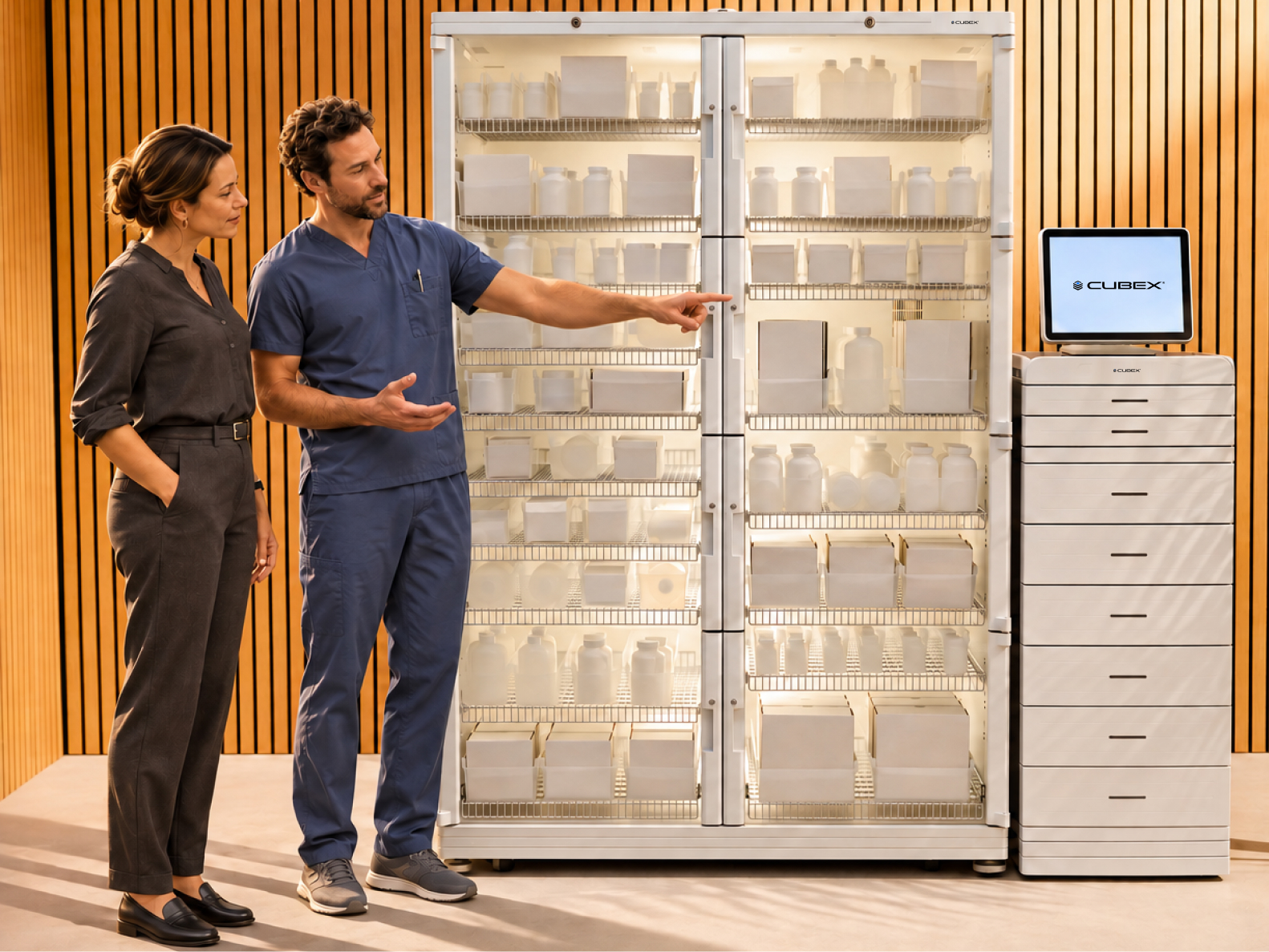
- Hardware and software built together. This is where inventory management actually becomes automated. Smart devices control access and record each transaction as the item is taken: smart cabinets, shelf-based tracking for open stock, locks for refrigerators, and more as the platform grows. Drug logs fill themselves in at the point of care, which supports compliance without anyone writing it down later. The software connects to everything around it: your practice management system, your distributors and suppliers, and your procurement platforms. Every dispense updates the count, the charge, and the reorder at once, and the workflow sets the standard for everyone. That's where the real efficiency and profit gains come from, and it's what makes it a platform, not hardware with software attached.
Cubex is in the third group. Its smart devices, software, and integrations are one platform, built by one company. Only this kind of system gets a hospital to Inventory Intelligence. When every area of inventory runs through one platform, the tools, the data, and the process all work together, and inventory stops being something your team has to think about. It works for you today and grows with you as the platform adds new devices and connections.
Should you choose Cubex or another system?
If you're comparing Cubex with another vendor, ask both the same eight questions, and have each one show you a real workflow instead of a slide. Then step back and ask three bigger questions:
- Will it automate inventory management over the long run and give my team time back for patient care?
- Is it a platform I can scale with, whether I scale up, scale down, or add hospitals?
- Where do I get the most value for what I spend?
Cubex is built around those three questions. It records each transaction as part of the dispense, so your team spends less time counting and more time with patients. Its smart devices and software run as one platform that grows from one hospital to many. And it closes the gaps between what you buy, use, and charge, which is where the value shows up.
Is the cheapest system the best value?
Software-only tools have traditionally been the cheapest to buy, but that's no longer a given. And price is the easy number. The harder one is what your current process already costs you. Some of it is hard dollars you can find on an invoice:
- Product that expired on the shelf
- Items that were used but never billed
- Rush orders when something ran out
- Cash tied up in stock you didn't need
Some of it is soft dollars, the time and effort that never shows up as a line item:
- Staff hours spent counting, ordering, and reconciling
- Time spent looking for an item in the middle of a case
- Training someone new every time the person who runs inventory leaves
Then look past today. Value isn't just cost. It's whether a system solves the problems you have now and the ones you see coming, like a second location, a busier season, or the next round of turnover.
Value also shows up in what your hospital is worth. If you ever sell, a buyer will ask how the hospital runs, and that includes inventory and the back office. An automated system makes a stronger case at valuation time: inventory runs the same way no matter who's on shift, and every item has a record behind it. When inventory runs on manual counts, or on staff remembering to enter things in software, a buyer sees a set of habits instead of a system. Habits leave when people do, and that's hard to put a value on.
A system that costs more up front can cost less over time if it closes those gaps, grows with you, and adds to what your hospital is worth. A cheaper tool that still depends on people entering everything by hand doesn't do any of that.
Where should you start?
Write down the problem that started your search. Bring the questions above to two or three vendors. Ask each one to walk through a real day in your treatment area: pulling an item, the charge landing on the invoice, and the reorder going out. The right system makes that walk-through short.
Cubex is an automated inventory management platform for veterinary hospitals. Cubex software and smart cabinets work as one platform, so every item taken is recorded, charged, and reordered without a second step.
Frequently asked questions
What's the best inventory system for a veterinary hospital?
The best system records usage when items are taken, turns that usage into charges through your practice management system, reorders automatically, and covers the inventory you carry. Cubex does all four on one platform, with smart cabinets and software built to work together.
Do I need a smart cabinet, or is software enough?
Software alone works if your team enters every transaction, every time. When entries get missed, counts and charges drift. Smart cabinets that control access record each transaction as the item is taken. Cubex combines both in one platform.
Should I choose Cubex or another inventory system?
Ask both vendors the same questions and have them show you a real workflow. Then ask which one will automate inventory management over the long run, which one you can scale with, and which gives you the most value for what you spend. Cubex is built around all three: one platform that records usage at the point of care and grows from one hospital to many.
What's the cheapest veterinary inventory system?
Software-only tools have traditionally been the cheapest to buy, though that's no longer a given. They also depend on staff entering every transaction. Missed entries turn into missed charges and expired stock, which can cost more than the system saved. Compare each quote against what your current process costs. Cubex's profit calculator can help you estimate it.
Where should a veterinary hospital start with automated inventory management?
Start with one area. The treatment area is usually the best place to begin, with the pharmacy next. Get it working, then add the rest.
About CUBEX
CUBEX is an automated inventory management platform for veterinary hospitals. Combining secure smart devices with purpose-built software, CUBEX tracks every dispense in real time, supports controlled substance compliance, reduces waste and stockouts, and streamlines replenishment through connected workflows, including integrations with leading PIMS and supplier ordering platforms. The result is less manual work, better inventory control, and more time back for veterinary teams. Learn more →