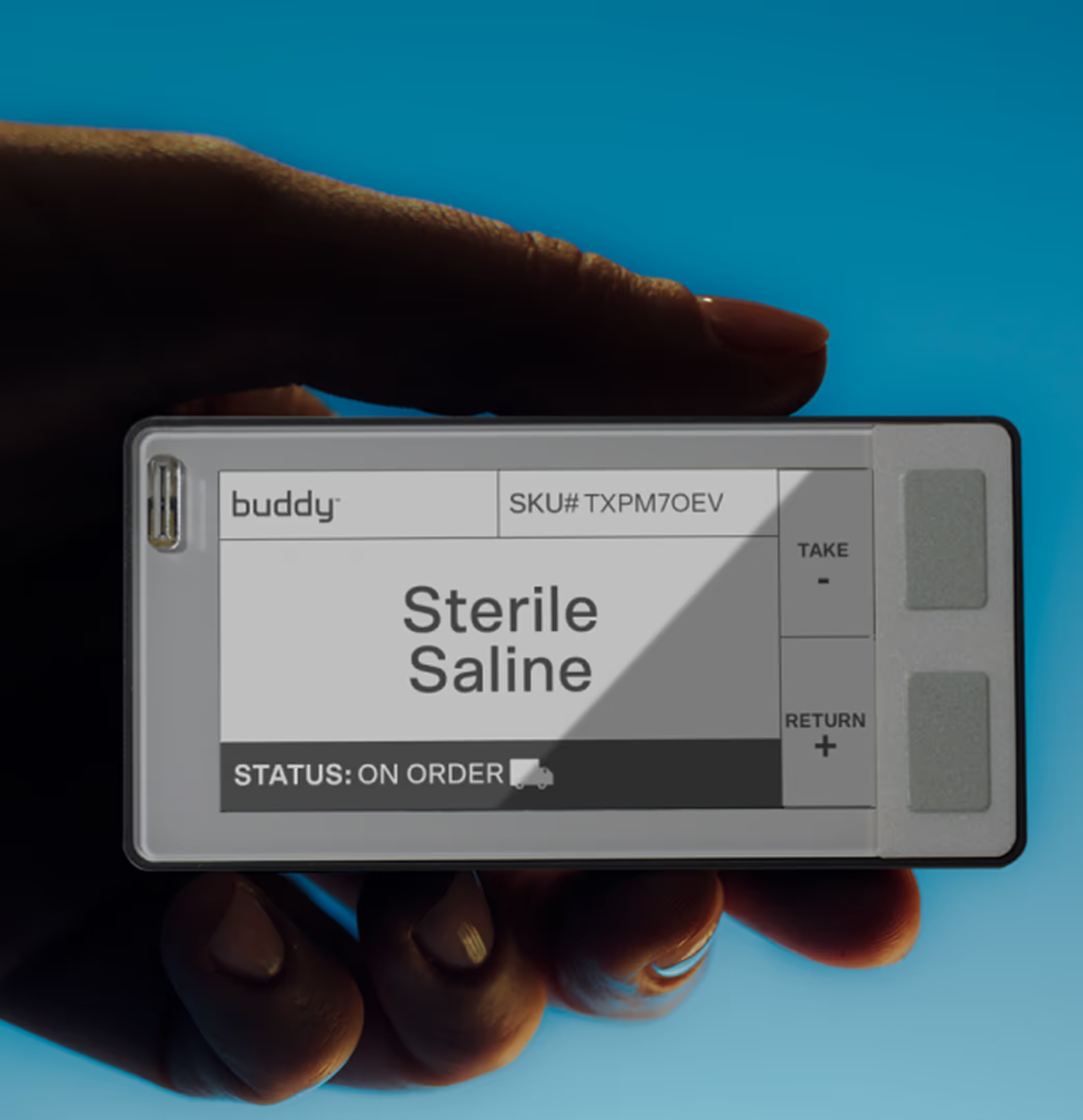
An inventory system should reduce compliance risk, not increase it. When inventory tracking processes are inconsistent and unclear, which often happens when they are performed manually, veterinary hospitals may face risk exposure for noncompliance, drug diversion, and other operational disruptions that could otherwise have been preventable.
Why Inventory Systems Matter for Compliance Risk
Veterinary hospitals practicing with controlled substances must operate according to specific DEA recordkeeping requirements outlined in 21 CFR 1304, as well as applicable state regulations governing the use and management of controlled substances. A significant portion of DEA compliance focuses on the ability to track every controlled substance container in inventory from the point of acquisition through disposition. In other words, from the time of ordering and receiving through all usage instances until the container is fully used and depleted or expires and undergoes final destruction. When inventory systems fail to capture all required data accurately and consistently, compliance risk increases.
Controlled substance tracking is more than a regulatory obligation. It is also a safeguard for the veterinary hospital’s reputation, team accountability, and financial stability. Gaps in inventory documents can lead to discrepancies, recordkeeping violations during regulatory inspections, and internal uncertainty about what is actually “on hand”.
A strong inventory system supports veterinary hospital best practices by aligning inventory purchasing, dispensing, reconciliation, and reporting into a structured workflow. When these elements are disconnected, risk grows quietly in the background.
DEA Recordkeeping Violations & Controlled Substance Logging
One of the main indicators that inventory gaps may exist within your DEA-required recordkeeping is incomplete or inconsistent controlled substance logs. For veterinary hospitals using paper logbooks to track inventory, these gaps can present as missing dates, signatures, patient identification information, etc. from log entries, as well as blank spaces that were never completed entirely at the time of dispensing.
Citations for recordkeeping violations are also not uncommon if controlled substance logs are not properly maintained; i.e. separated out per 21 CFR 1304.21(a) and chronologically organized for the current two-year period (or longer depending on the state where you practice) in a “readily retrievable” manner available for inspection at the registered premises. Missing information on logsheet headers identifying a specific controlled substance name, strength, dosage, form, and container size is another citable violation, and the DEA has authority to cite civil monetary penalties (CMPs) for each identified violation separately, which may be cited up to $19,246 per violation. Veterinary hospitals that maintain controlled substance inventories as a “running log” instead of logging each controlled substance by container are also violating DEA regulations.
Even seemingly minor documentation gaps in controlled substance logs can be indicative of deeper internal issues, and can lead to larger concerns during a regulatory review or inspection.
DEA Compliant Controlled Substance Logs
DEA inventory requirements are set forth in 21 CFR 1304.11; outlining specific information that must be documented and logged in “real-time” according to the type of activity a registrant conducts with controlled substances. Many veterinary hospitals use the DEA registration of a veterinarian who is using a personal DEA practitioner registration to order controlled substances and maintain an inventory on behalf of the facility for patient care. In this capacity, controlled substance logs must be maintained according to “dispenser” requirements under 21 CFR 1304.11(e).
To meet these standards, an organized system must be implemented to track controlled substances by container according to their inventory status and activity, from acquisition to disposition, including information such as:
- Name, strength, dosage, form, and container size
- Unopened containers received into backstock
- Movement of unopened backstock containers into active stock
- All open active stock container usage (administering, in-house dispensing, inventory counts etc.) until depleted or expired and set aside for final destruction.
- Administrative waste resulting from excess leftover from patient administration (documented within the specific patient log entry it was associated with when dispensed)
- End of container/bottle counts (including any identified discrepancies and documentation of how they were investigated, resolved, and/or reported)
- Expired containers awaiting destruction (separated out from non-expired inventory)
In addition, all usage activity for open containers in active stock must be logged in “real-time” to meet DEA Continuing Records requirements set forth in 21 CFR 1304.11 and 21 CFR 1304.21 to indicate, at minimum:
- Transaction date
- Patient Name
- Patient Address/Identification Information
- Container Number
- Dispensing/Administration Reason
- Volume/Amount Dispensed
- Actual Amount Administered
- Any Amount Wasted
- Remaining Balance
- Signature of Dispensing Employee and Witness
Regularly spending time reviewing controlled substance logs to reconcile errors and discrepancies, is often a sign that your inventory management system may need to be re-evaluated.
Inconsistent Controlled Substance Logging Across Teams

Another inventory management red flag is inconsistency across veterinary hospital departments and/or shifts. For example, if one technician is logging in “real-time” but others are waiting until the end of the day or shift, in addition to violating DEA requirements to log controlled substance usage at the time of dispensing and administration, logging discrepancies are increasingly likely to occur.
DEA compliant controlled substance logging is not conducive or dependent upon professional preference or individual habits. Controlled substance logging processes must be standardized in the form of operating procedures implemented and enforced throughout an entire hospital. Those procedures should be further supplemented by workflows and checklists for specific employee roles and responsibilities; creating a system of checks and balances that ensure logging tasks do not slip through the cracks and all processes reinforce and verify an overall system of accountability and compliance. Without standardized procedures it is impossible to ensure that processes are performed accurately and consistently across multiple teams and departments.
Inventory Discrepancies & Reconciliations
Inventory discrepancies can often show up as minor variances. A vial is slightly off from expected levels. A tablet count does not match the dispensing log. Over time, small variances can compound into larger ones.
All controlled substance discrepancies must be investigated, documented and thoroughly resolved. If the discrepancy cannot be thoroughly resolved, written notification must be sent to the local DEA division office within one business day of discovery as required under 21 CFR 1301.76(b).
To avoid discrepancies, veterinary hospitals should be regularly reconciling controlled substance inventory. A DEA reconciliation is an accounting process wherein physical counts of controlled substances in inventory (“actual inventory”) are compared against the amounts reflected in controlled substance logs (“expected inventory”). Any difference between the actual inventory and expected inventory is a discrepancy. Reconciliations should always be conducted by an authorized individual and witness, preferably in an area covered by security cameras. Reconciliations should also always be documented using a separate controlled substance reconciliation log.
Reconciliations should be conducted on a consistent basis, recommended weekly at the very minimum. Without a consistent and structured inventory reconciliation process, discrepancies go unaddressed and compliance risk increases.
Overreliance on Manual Processes and Spreadsheets
Relying on manual systems is a common source of inventory errors. Spreadsheets are useful tools as long as the data entered into them is accurate and consistent. Paper logbooks have the capacity to keep accurate and compliant controlled substance dispensing records; however, the individuals completing them make mathematical mistakes, forget to include required information, at times do not always have legible handwriting, and do not always complete logging in “real-time”. If adjustments are recorded at the end of the day rather than at the time of dispensing, in addition to falling out of compliance with DEA requirements to log in “real-time”, inventory tracking becomes reactive instead of proactive.
Additionally, when multiple team members are logging manually, the risk for human error and mistakes to be made grows. Many of these mistakes can be simple math errors, such as reversing digits or miscounting tablets that while not nefarious in nature lead to documentation inaccuracies that result in discrepancies.
Lack of Visibility Into Usage, Access, and Adjustments
When it comes to controlled substance inventory, limited visibility is often an overlooked risk factor. If leadership cannot quickly answer questions such as who accessed a medication, when it was dispensed, or how much of a particular controlled substance is “on hand”, your inventory management system is not providing sufficient oversight. When visibility is fragmented across different tools or departments, it becomes difficult to maintain a reliable inventory audit trail. This fragmentation can weaken drug diversion prevention efforts, which depend on visibility and accountability. When access, dispensing, and documentation vary from person to person, veterinary hospitals lose that visibility.
Visibility supports risk management for controlled substance compliance. It allows veterinary hospitals to identify unusual usage patterns and anomalies early and address them before they can escalate. Visibility also strengthens internal accountability by providing a clear, documented trail of access and transactions. Manual inventory management systems often make visibility more challenging. A well-structured inventory system reduces dependency on memory recall and handwritten documentation. If your team frequently relies on informal workarounds, it may be time to reassess the system in place.
How a Well-Maintained Inventory System Prevents Issues in a Veterinary Hospital
A well-maintained inventory system helps prevent issues by creating structure and consistency. In any healthcare facility, including veterinary hospitals, inventory systems that align with pharmacy inventory best practices help reduce errors before they become compliance problems.
A strong inventory management system typically includes:
- Documented standard operating procedures (SOPs)
- Consistent inventory reconciliations
- Secure inventory access controls
- Accurate, “real-time” controlled substance logging
When these elements are in place, veterinary hospitals are better positioned for compliance with DEA and state recordkeeping requirements. They are also more likely to identify discrepancies early on; reducing operational disruption and regulatory exposure.
Well-maintained inventory systems do more than support successful regulatory inspection outcomes. They also improve day-to-day efficiency by reducing confusion, duplicate work, and emergency recounts.
Proactive Risk Reduction With Veterinary Inventory Management Software
Hardware-based inventory management plays a foundational role in preventing the kind of access and documentation gaps that create compliance risk. CUBEX automated dispensing systems physically secure controlled substances and require authenticated access before any medication can be retrieved, ensuring that every transaction is recorded at the moment it occurs rather than reconstructed later. That physical layer of control is what makes downstream documentation reliable in the first place.
Modern veterinary inventory management software can help address many of the inventory issues veterinary hospitals struggle with by integrating controlled substance tracking with secure access controls and “real-time” documentation. CUBEX inventory management solutions help veterinary hospitals maintain structured workflows that align controlled substance dispensing with accurate logging that strengthens recordkeeping compliance without increasing administrative burdens.
By centralizing documentation and reducing reliance on manual processes, CUBEX helps veterinary hospitals proactively manage compliance risk rather than reacting to issues when they arise and have already become a problem.
Your inventory management system should act as a safeguard, not a liability. Identifying weaknesses early and investing in visible processes that reinforce accountability helps protect your hospital, your team, and your business.

Kelley Detweiler is a DEA and controlled substance regulatory compliance specialist who provides solutions to veterinarians through her partnership with Dr. Peter Weinstein in Simple Solutions 4 Vets. She is the DEA compliance CE provider for the American Veterinary Medical Association (AVMA), the co-author of Safeguarding Controlled Substances, published by AAHA Press, and the 2024 recipient of the Illinois State Veterinary Medical Association’s President’s Award.
About CUBEX
CUBEX is an automated inventory management platform for veterinary hospitals. Combining secure smart devices with purpose-built software, CUBEX tracks every dispense in real time, supports controlled substance compliance, reduces waste and stockouts, and streamlines replenishment through connected workflows, including integrations with leading PIMS and supplier ordering platforms. The result is less manual work, better inventory control, and more time back for veterinary teams. Learn more →

An inventory system should reduce compliance risk, not increase it. When inventory tracking processes are inconsistent and unclear, which often happens when they are performed manually, veterinary hospitals may face risk exposure for noncompliance, drug diversion, and other operational disruptions that could otherwise have been preventable.
Why Inventory Systems Matter for Compliance Risk
Veterinary hospitals practicing with controlled substances must operate according to specific DEA recordkeeping requirements outlined in 21 CFR 1304, as well as applicable state regulations governing the use and management of controlled substances. A significant portion of DEA compliance focuses on the ability to track every controlled substance container in inventory from the point of acquisition through disposition. In other words, from the time of ordering and receiving through all usage instances until the container is fully used and depleted or expires and undergoes final destruction. When inventory systems fail to capture all required data accurately and consistently, compliance risk increases.
Controlled substance tracking is more than a regulatory obligation. It is also a safeguard for the veterinary hospital’s reputation, team accountability, and financial stability. Gaps in inventory documents can lead to discrepancies, recordkeeping violations during regulatory inspections, and internal uncertainty about what is actually “on hand”.
A strong inventory system supports veterinary hospital best practices by aligning inventory purchasing, dispensing, reconciliation, and reporting into a structured workflow. When these elements are disconnected, risk grows quietly in the background.
DEA Recordkeeping Violations & Controlled Substance Logging
One of the main indicators that inventory gaps may exist within your DEA-required recordkeeping is incomplete or inconsistent controlled substance logs. For veterinary hospitals using paper logbooks to track inventory, these gaps can present as missing dates, signatures, patient identification information, etc. from log entries, as well as blank spaces that were never completed entirely at the time of dispensing.
Citations for recordkeeping violations are also not uncommon if controlled substance logs are not properly maintained; i.e. separated out per 21 CFR 1304.21(a) and chronologically organized for the current two-year period (or longer depending on the state where you practice) in a “readily retrievable” manner available for inspection at the registered premises. Missing information on logsheet headers identifying a specific controlled substance name, strength, dosage, form, and container size is another citable violation, and the DEA has authority to cite civil monetary penalties (CMPs) for each identified violation separately, which may be cited up to $19,246 per violation. Veterinary hospitals that maintain controlled substance inventories as a “running log” instead of logging each controlled substance by container are also violating DEA regulations.
Even seemingly minor documentation gaps in controlled substance logs can be indicative of deeper internal issues, and can lead to larger concerns during a regulatory review or inspection.
DEA Compliant Controlled Substance Logs
DEA inventory requirements are set forth in 21 CFR 1304.11; outlining specific information that must be documented and logged in “real-time” according to the type of activity a registrant conducts with controlled substances. Many veterinary hospitals use the DEA registration of a veterinarian who is using a personal DEA practitioner registration to order controlled substances and maintain an inventory on behalf of the facility for patient care. In this capacity, controlled substance logs must be maintained according to “dispenser” requirements under 21 CFR 1304.11(e).
To meet these standards, an organized system must be implemented to track controlled substances by container according to their inventory status and activity, from acquisition to disposition, including information such as:
- Name, strength, dosage, form, and container size
- Unopened containers received into backstock
- Movement of unopened backstock containers into active stock
- All open active stock container usage (administering, in-house dispensing, inventory counts etc.) until depleted or expired and set aside for final destruction.
- Administrative waste resulting from excess leftover from patient administration (documented within the specific patient log entry it was associated with when dispensed)
- End of container/bottle counts (including any identified discrepancies and documentation of how they were investigated, resolved, and/or reported)
- Expired containers awaiting destruction (separated out from non-expired inventory)
In addition, all usage activity for open containers in active stock must be logged in “real-time” to meet DEA Continuing Records requirements set forth in 21 CFR 1304.11 and 21 CFR 1304.21 to indicate, at minimum:
- Transaction date
- Patient Name
- Patient Address/Identification Information
- Container Number
- Dispensing/Administration Reason
- Volume/Amount Dispensed
- Actual Amount Administered
- Any Amount Wasted
- Remaining Balance
- Signature of Dispensing Employee and Witness
Regularly spending time reviewing controlled substance logs to reconcile errors and discrepancies, is often a sign that your inventory management system may need to be re-evaluated.
Inconsistent Controlled Substance Logging Across Teams
Another inventory management red flag is inconsistency across veterinary hospital departments and/or shifts. For example, if one technician is logging in “real-time” but others are waiting until the end of the day or shift, in addition to violating DEA requirements to log controlled substance usage at the time of dispensing and administration, logging discrepancies are increasingly likely to occur.
DEA compliant controlled substance logging is not conducive or dependent upon professional preference or individual habits. Controlled substance logging processes must be standardized in the form of operating procedures implemented and enforced throughout an entire hospital. Those procedures should be further supplemented by workflows and checklists for specific employee roles and responsibilities; creating a system of checks and balances that ensure logging tasks do not slip through the cracks and all processes reinforce and verify an overall system of accountability and compliance. Without standardized procedures it is impossible to ensure that processes are performed accurately and consistently across multiple teams and departments.
Inventory Discrepancies & Reconciliations
Inventory discrepancies can often show up as minor variances. A vial is slightly off from expected levels. A tablet count does not match the dispensing log. Over time, small variances can compound into larger ones.
All controlled substance discrepancies must be investigated, documented and thoroughly resolved. If the discrepancy cannot be thoroughly resolved, written notification must be sent to the local DEA division office within one business day of discovery as required under 21 CFR 1301.76(b).
To avoid discrepancies, veterinary hospitals should be regularly reconciling controlled substance inventory. A DEA reconciliation is an accounting process wherein physical counts of controlled substances in inventory (“actual inventory”) are compared against the amounts reflected in controlled substance logs (“expected inventory”). Any difference between the actual inventory and expected inventory is a discrepancy. Reconciliations should always be conducted by an authorized individual and witness, preferably in an area covered by security cameras. Reconciliations should also always be documented using a separate controlled substance reconciliation log.
Reconciliations should be conducted on a consistent basis, recommended weekly at the very minimum. Without a consistent and structured inventory reconciliation process, discrepancies go unaddressed and compliance risk increases.
Overreliance on Manual Processes and Spreadsheets
Relying on manual systems is a common source of inventory errors. Spreadsheets are useful tools as long as the data entered into them is accurate and consistent. Paper logbooks have the capacity to keep accurate and compliant controlled substance dispensing records; however, the individuals completing them make mathematical mistakes, forget to include required information, at times do not always have legible handwriting, and do not always complete logging in “real-time”. If adjustments are recorded at the end of the day rather than at the time of dispensing, in addition to falling out of compliance with DEA requirements to log in “real-time”, inventory tracking becomes reactive instead of proactive.
Additionally, when multiple team members are logging manually, the risk for human error and mistakes to be made grows. Many of these mistakes can be simple math errors, such as reversing digits or miscounting tablets that while not nefarious in nature lead to documentation inaccuracies that result in discrepancies.
Lack of Visibility Into Usage, Access, and Adjustments
When it comes to controlled substance inventory, limited visibility is often an overlooked risk factor. If leadership cannot quickly answer questions such as who accessed a medication, when it was dispensed, or how much of a particular controlled substance is “on hand”, your inventory management system is not providing sufficient oversight. When visibility is fragmented across different tools or departments, it becomes difficult to maintain a reliable inventory audit trail. This fragmentation can weaken drug diversion prevention efforts, which depend on visibility and accountability. When access, dispensing, and documentation vary from person to person, veterinary hospitals lose that visibility.
Visibility supports risk management for controlled substance compliance. It allows veterinary hospitals to identify unusual usage patterns and anomalies early and address them before they can escalate. Visibility also strengthens internal accountability by providing a clear, documented trail of access and transactions. Manual inventory management systems often make visibility more challenging. A well-structured inventory system reduces dependency on memory recall and handwritten documentation. If your team frequently relies on informal workarounds, it may be time to reassess the system in place.
How a Well-Maintained Inventory System Prevents Issues in a Veterinary Hospital
A well-maintained inventory system helps prevent issues by creating structure and consistency. In any healthcare facility, including veterinary hospitals, inventory systems that align with pharmacy inventory best practices help reduce errors before they become compliance problems.
A strong inventory management system typically includes:
- Documented standard operating procedures (SOPs)
- Consistent inventory reconciliations
- Secure inventory access controls
- Accurate, “real-time” controlled substance logging
When these elements are in place, veterinary hospitals are better positioned for compliance with DEA and state recordkeeping requirements. They are also more likely to identify discrepancies early on; reducing operational disruption and regulatory exposure.
Well-maintained inventory systems do more than support successful regulatory inspection outcomes. They also improve day-to-day efficiency by reducing confusion, duplicate work, and emergency recounts.
Proactive Risk Reduction With Veterinary Inventory Management Software
Hardware-based inventory management plays a foundational role in preventing the kind of access and documentation gaps that create compliance risk. CUBEX automated dispensing systems physically secure controlled substances and require authenticated access before any medication can be retrieved, ensuring that every transaction is recorded at the moment it occurs rather than reconstructed later. That physical layer of control is what makes downstream documentation reliable in the first place.
Modern veterinary inventory management software can help address many of the inventory issues veterinary hospitals struggle with by integrating controlled substance tracking with secure access controls and “real-time” documentation. CUBEX inventory management solutions help veterinary hospitals maintain structured workflows that align controlled substance dispensing with accurate logging that strengthens recordkeeping compliance without increasing administrative burdens.
By centralizing documentation and reducing reliance on manual processes, CUBEX helps veterinary hospitals proactively manage compliance risk rather than reacting to issues when they arise and have already become a problem.
Your inventory management system should act as a safeguard, not a liability. Identifying weaknesses early and investing in visible processes that reinforce accountability helps protect your hospital, your team, and your business.